Guernsey in this period
Guernsey enters the Norman political world. Fiefs, parishes and landholding are organised through institutions brought from Normandy and adapted to the island.
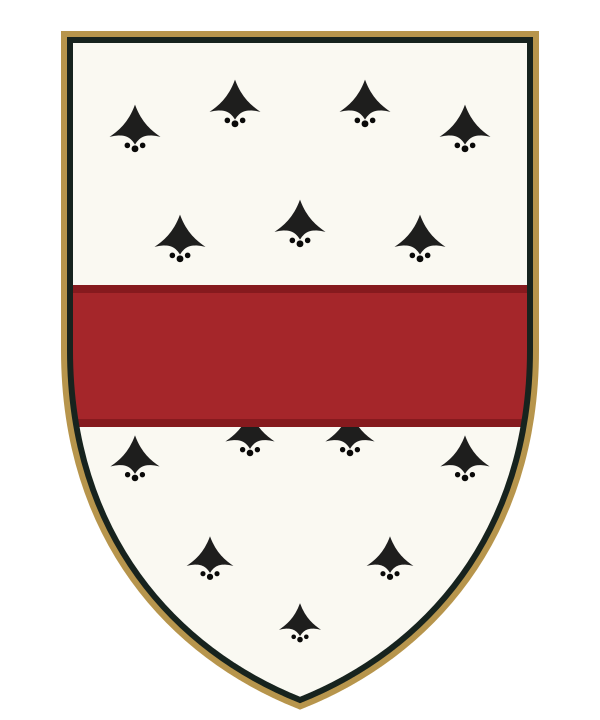 Arms associated with Anneville: ermine, a fess gules
In 1815 the historian William Berry described the Fief d'Anneville as "the noblest tenure" in Guernsey. Its lord, he wrote, "is next in rank after the clergy", must attend the King's court three times a year, and is "bound, when the King comes to the Island, to attend him as his esquire during his stay." This museum tells how a name reached that rank, and how it has lasted.
The name itself is a record of settlement. Anneville comes from Anslecvilla, the farm of a Norseman called ÁslæikR: a Scandinavian man and a Latin word joined in one place-name, as Normandy itself joined Norse settlers to Frankish land and faith. The genealogist De La Chesnaye des Bois, writing in the eighteenth century, counts five Norman parishes bearing the name. Among the places that still carry it are Anneville-en-Saire and Anneville-sur-Mer in the Manche, Anneville-sur-Scie and Anneville-Ambourville in the Seine-Maritime.
In the eighteenth century the genealogist De La Chesnaye des Bois placed the Maison d'Anneville among the oldest houses of Lower Normandy. He was honest about the limits of his evidence: the house, he said, could show six centuries of antiquity, but no historian had fixed its origin. Anneville-en-Saire, held in full fief de haubert of the King, spread across eight parishes of the Val de Saire.
Across the water lay Guernsey, part of the same duchy. Berry recorded that two lords there held "droit de haute justice, or the privilege of judging, condemning, and executing criminals": the Abbot of Mont-Saint-Michel and the Seigneur d'Anneville.
W. Berry, The History of the Island of Guernsey (London, 1815), pp. 64, 124; F.-A. Aubert de La Chesnaye des Bois, Dictionnaire de la noblesse, article ANNEVILLE (Gallica/BnF); Recueil des actes de Henri II.Norman means, first of all, Norse. In 911 the Frankish king gave the lower Seine to the Viking leader Rollo, and his people settled the land that became Normandy. Their place-names joined a Norse personal name to a Latin or French word: Anslecvilla, the farm of Áslæikr, is one of them. The name Anneville carries that double origin, Scandinavian settler and Frankish land, as Normandy itself does.
Guernsey enters the Norman political world. Fiefs, parishes and landholding are organised through institutions brought from Normandy and adapted to the island.
Anneville gives Guernsey a direct bridge to the Cotentin and to the aristocratic landscape from which the island’s feudal institutions emerged. It makes the Norman origin of Guernsey visible through one continuing name.
The name Anneville belongs to the Norman world on both sides of the Channel. De La Chesnaye des Bois records the Maison d'Anneville — the House of Anneville — among the oldest houses of Lower Normandy. He records five parishes bearing the Anneville name, and the Seigneur d'Anneville — the lord, or holder, of the fief of Anneville — holding a command in the Val de Saire in 1066. In the records of Lessay, three men of the family appear in the early twelfth century: Willelmus, Gaufridus and Joannes de Annevilla. The same House of Anneville also held the Fief d'Anneville in Guernsey — a fief being a piece of land together with the rights attached to it, such as dues paid by tenants, a court, mills and hunting rights, held from a superior lord in exchange for loyalty and services. Place-name, lineage, church, military command and seigneurial possession all point to one and the same Norman house.
De La Chesnaye des Bois defines the Maison d'Anneville — the house of Anneville — as one of the oldest in Lower Normandy, and says that five parishes bore its name.
The same entry reports that in 1066, when Duke William undertook the conquest of England, the Seigneur d'Anneville — the lord holding the fief of Anneville — was chosen to command the Val-de-Saire while the Duke was away.
The same entry lists a fief — a piece of land together with the rights attached to it — extended in numerous places of the Val-de-Saire, and recalls donations by the Anneville to the abbey of Lessay from 1106.
The name appears in old documents in several spellings, such as Anneville and Ansneville. These spellings must be treated as variants of the same name, to be checked in their context, and not as people or families automatically distinguished from one another.
Arms associated with Anneville: ermine, a fess gules.Image · Museum rendering · project research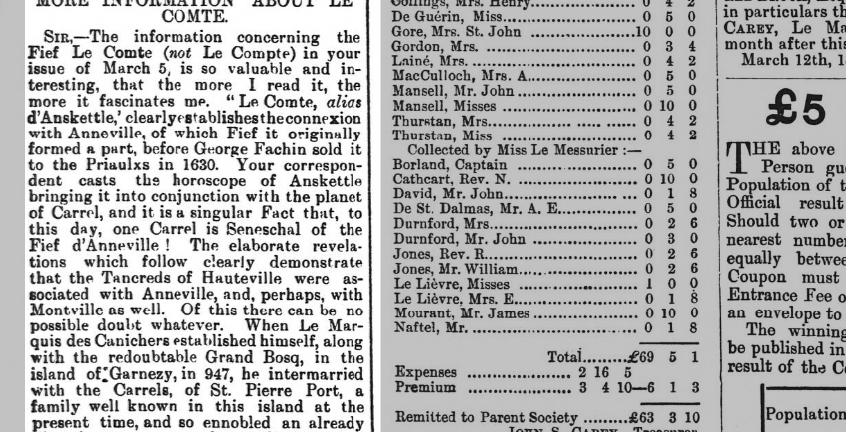 “More information about Le Comte”: letter to the editor on the Fief Le Comte and Anneville. A later printed source, not a contemporary record.Image · lordofanneville.com · Anneville before the Conquest
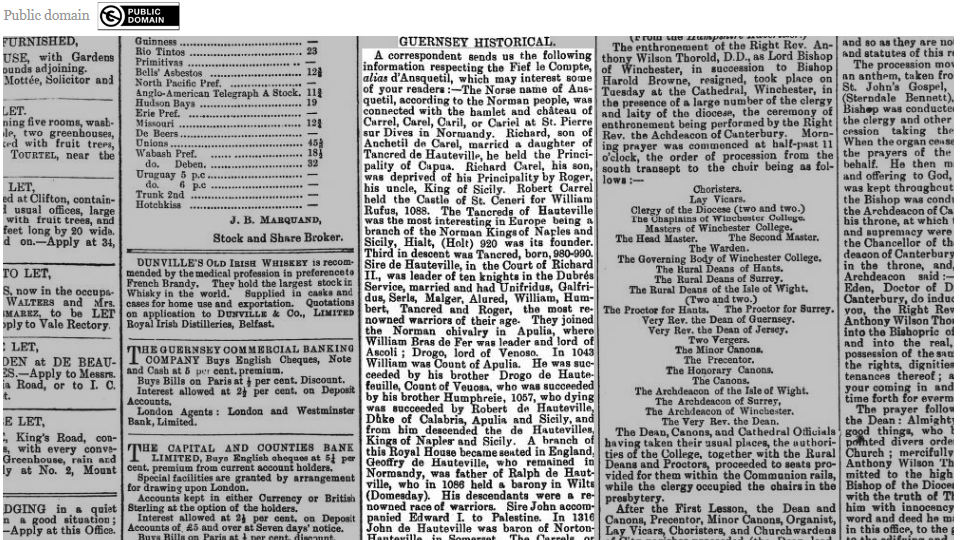 “Guernsey Historical”: newspaper column on the Fief le Compte, alias d’Ansquetil, and the Carrel and Hauteville families. A later printed source, not a contemporary record.Image · lordofanneville.com · Anneville before the Conquest
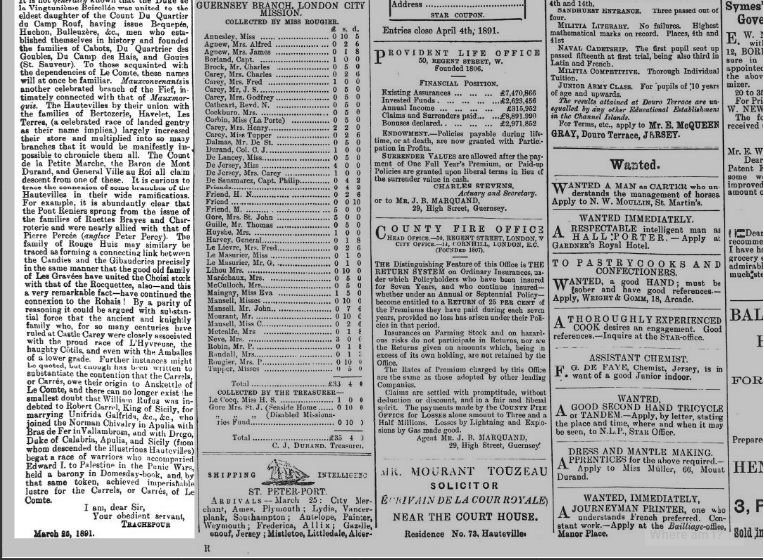 The Star, Guernsey, 26 March 1891: printed source used in the article “Anneville before the Conquest”. A later source, not a contemporary record.Image · lordofanneville.com · Anneville before the Conquest