Guernsey in this period
The Norman aristocracy moves across the Channel, serving dukes, founding religious links and building networks between Normandy and England.
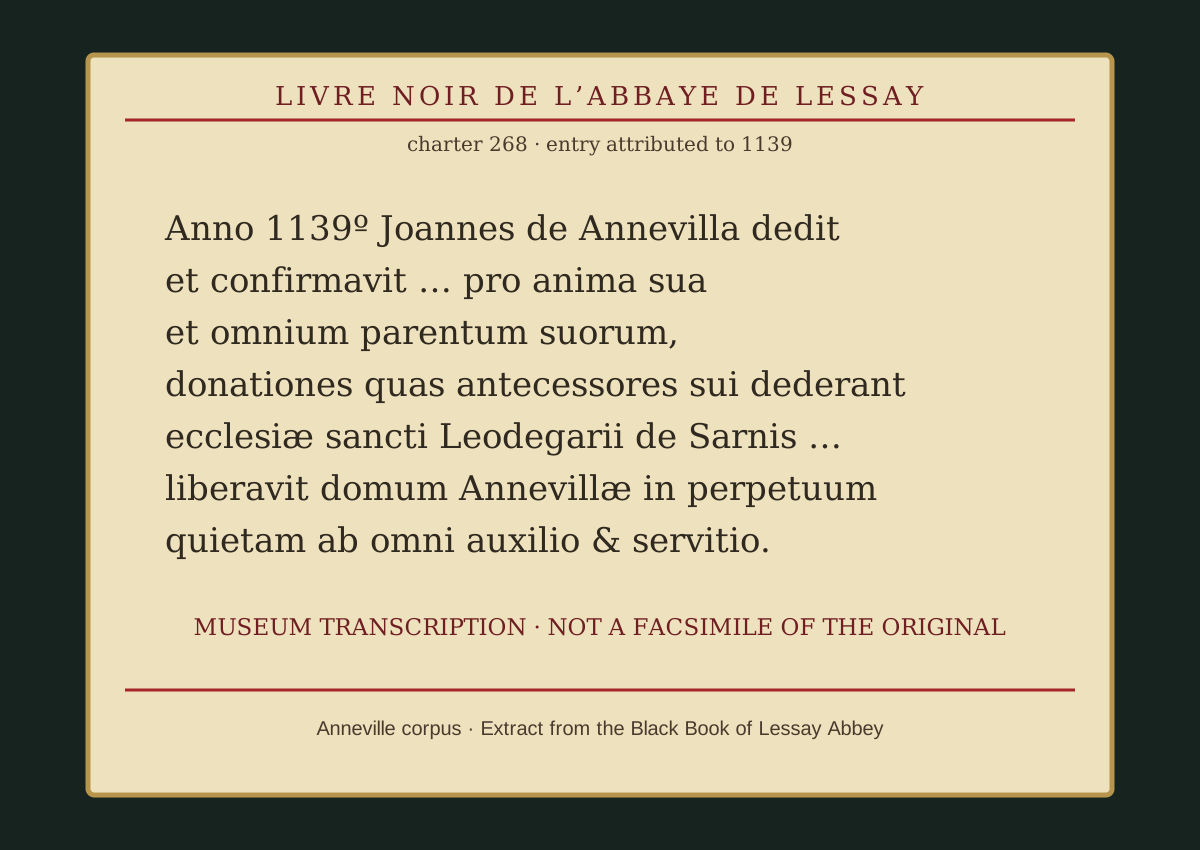
The first solid evidence of the Anneville family is a gift, not a battle. In 1106 a Norman landholder named Willelmus de Annevilla gave the abbey of Lessay, a monastery in Normandy, the whole church of Saint-Léger de Sarnis and a house beside the cemetery, and laid the gift on the altar of the Holy Trinity. In return the abbot granted him, his wife Hadewire and all their sons the societas loci, the spiritual fellowship of the house: the monks would pray for them as if they belonged to the place.
The same charter records a ransom. Willelmus gave a mark of silver, a weight of coin, to free his son Geoffridus from captivity. Two years later, in 1108, that son, now written Gaufridus, confirmed his father's gift and laid it on the same altar. What passed between father and son in those two years is not recorded. It is recorded that the son was free, and that he kept his father's word.
In 1139, in the middle of the civil war between the Empress Matilda and King Stephen — rivals for the English crown between 1135 and 1153 — Joannes de Annevilla renewed the family's gift, for his soul and for all his forebears. The witnesses were Rodguerius de Feriis and Ivo de Capeting. A charter is a small thing to set against a civil war, and very often the only thing that survives one.
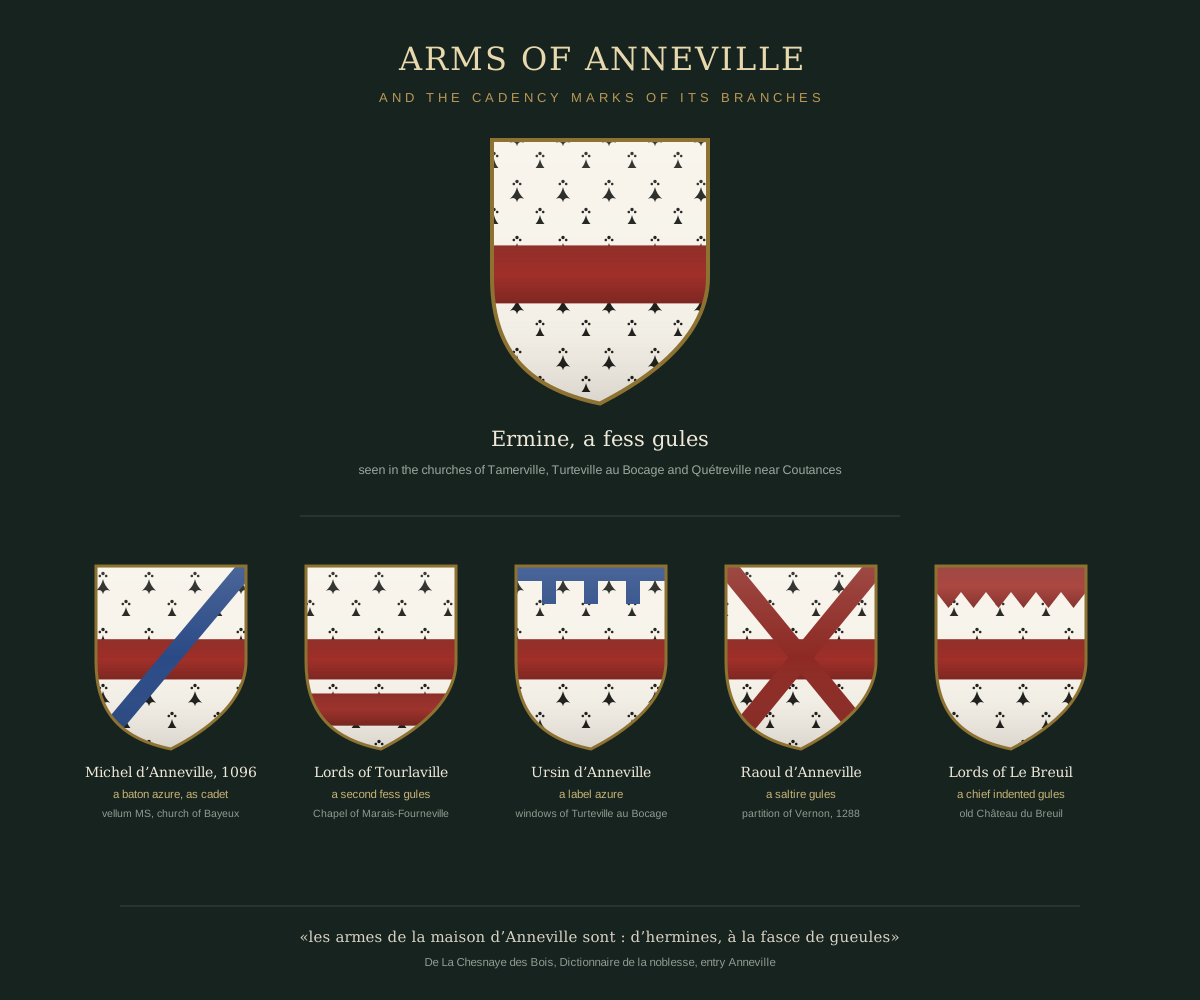
These acts are kept in the Livre noir of Lessay, the abbey's cartulary, a book in which the monks copied their charters. In its pages the name is spelled Annevilla; elsewhere it appears as Ansleville, Ansneville, Asneville, Aundevyle. The arms later associated with the name are ermine, a fess gules: a red band across a white field patterned with black ermine tails.
The family lived in a world where Normandy and England, after the conquest of 1066, were governed as one, so a name could cross the sea with its owners. Guernsey lies in the Channel, a few hours' sail from Normandy, under the Crown; St Sampson's is one of its parishes, named for its church. Antiquarian notes record a stone font worked at St Sampson's for the family that held Anneville. A Norman name was becoming a Guernsey seigneurie: a lordship with a lord, a manor and tenants of its own.
About these lines: a narrative reconstruction written in the manner of C. Northcote Parkinson (1909–1993), Seigneur of the Fief d'Anneville from 1964 to 1987, historian, and author of the novels of Richard Delancey, a Guernsey sailor. Parkinson did not write them and they are not a historical source. They invent no characters and no speeches: every fact comes from the room above, and words in quotation marks are quoted from the documents cited there.
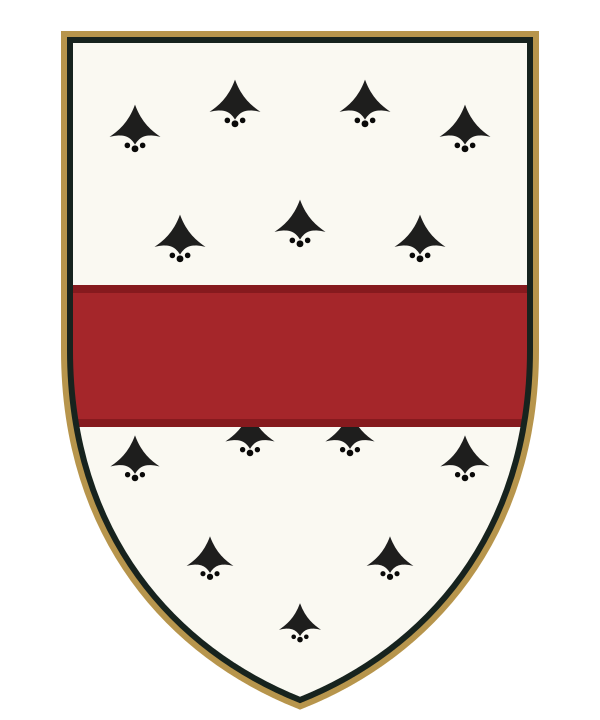 Arms associated with Anneville: ermine, a fess gules
The first firm evidence of the family is not a sword but a gift. In 1106 Willelmus de Annevilla gave the abbey of Lessay the whole church of Saint-Léger de Sarnis and the house of Anschitillus beside the cemetery, and laid the gift on the altar of the Holy Trinity. In return the abbot granted him, his wife Hadewire and all their sons the societas loci, the spiritual fellowship of the house. In the same act Willelmus gave a mark of silver to ransom his son Geoffridus from captivity.
Two years later, in 1108, Gaufridus de Annevilla confirmed his father's charter and laid it on the same altar. In 1139, in the middle of the civil war between the Empress Matilda and King Stephen, Joannes de Annevilla renewed the family's gift, for his soul and for all his forebears, before the witnesses Rodguerius de Feriis and Ivo de Capeting.
The Livre noir of Lessay, the abbey's cartulary, keeps these acts. In them the name is spelled Annevilla; elsewhere Ansleville, Ansneville, Asneville, Aundevyle. The arms that came to be associated with it are ermine, a fess gules.
The family moved in a world where Normandy and England, after 1066, were governed as one. The name crossed to the islands with it. Antiquarian notes record a stone font worked at St Sampson's for the family that held Anneville. A Norman name was becoming a Guernsey seigneurie.
Livre noir de l'abbaye de Lessay (acts of 1106, 1108, 1139); antiquarian notes on St Sampson's; Ogier, Notes concerning the Fief d'Anneville.The gift of 1106 is Norman in its form. A knight of the Cotentin lays his gift on the altar of the abbey of Lessay and receives in return the fellowship of its monks. Norman lords tied their families to the great Benedictine abbeys of the duchy, and the same abbeys, Mont-Saint-Michel first among them, held land in Guernsey. Family, abbey and fief belong to one Norman world.
The Norman aristocracy moves across the Channel, serving dukes, founding religious links and building networks between Normandy and England.
The Anneville family places Guernsey within a wider cross-Channel world. Their history explains why the island’s identity is both insular and deeply connected to Normandy, England and the sea routes between them.
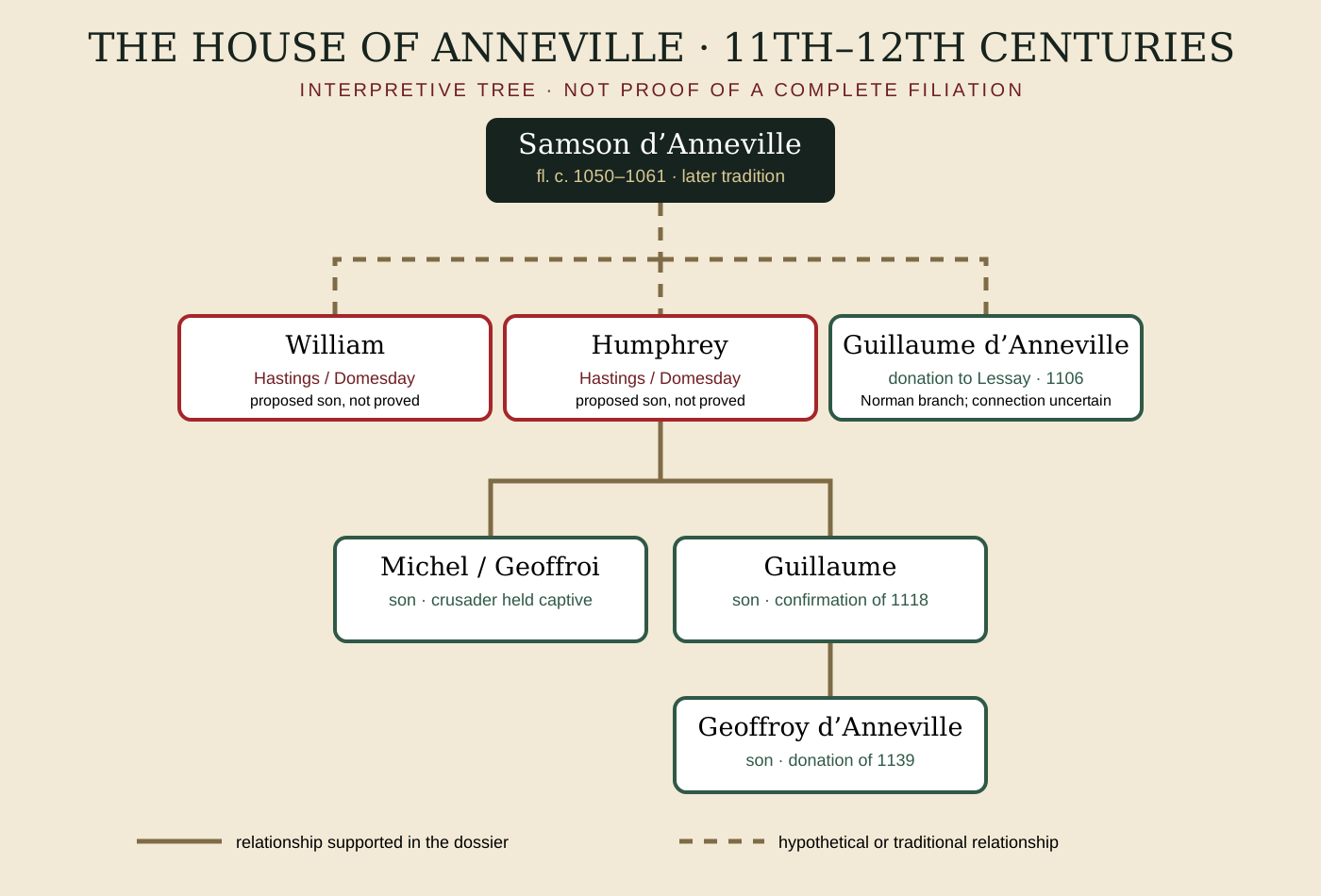
The House of Anneville was the family that held the Fief d'Anneville in Guernsey. A fief was a piece of land together with the rights attached to it, held from a superior lord in exchange for loyalty and services. French genealogy records the family's lineage in Lower Normandy, its command of the Val de Saire, its crusading memory and its successive generations. Records from Lessay and the Cotentin place the same name within the Norman church and land-holding landscape. The Guernsey fief gives this continental history its continuation on the island.
The genealogical record sets out the House of Anneville and its successive generations. Placed beside the charters of Lessay and the Cotentin, the genealogy gives names and lineage to the same Anneville landscape.
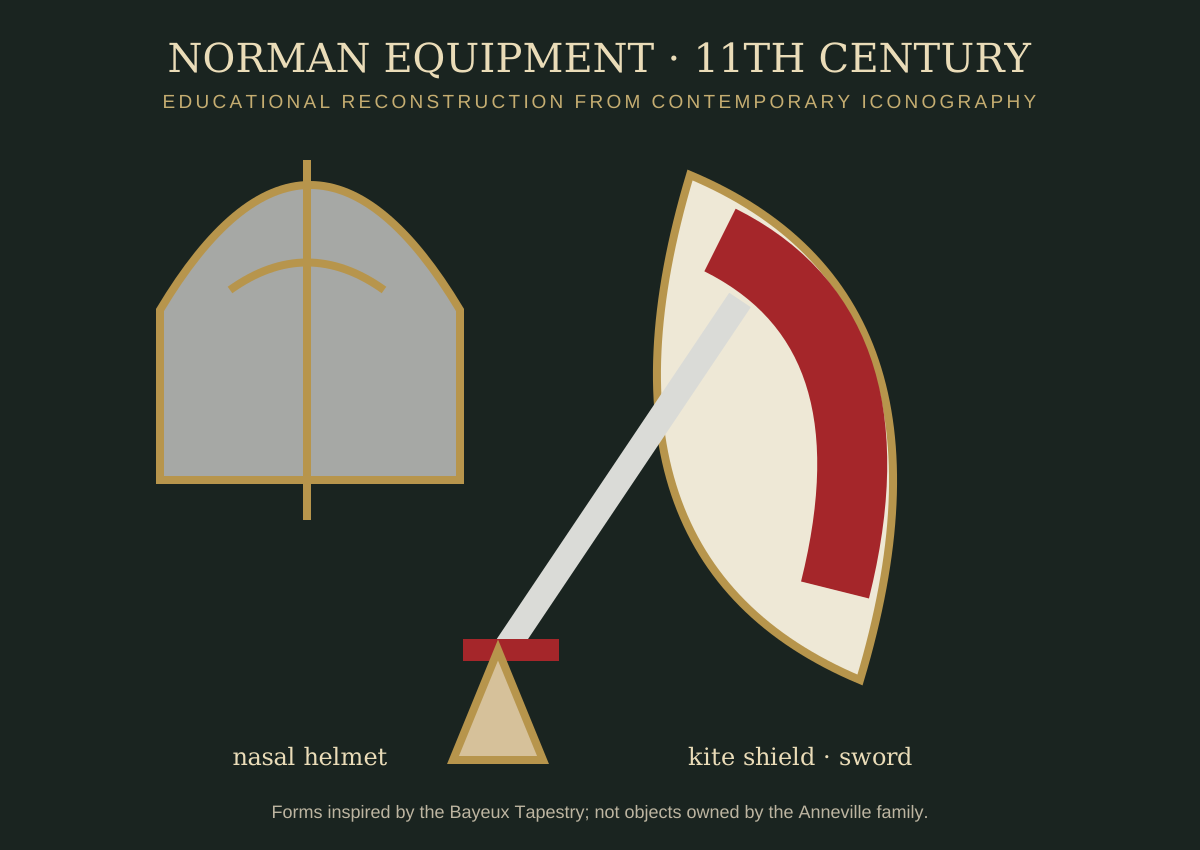
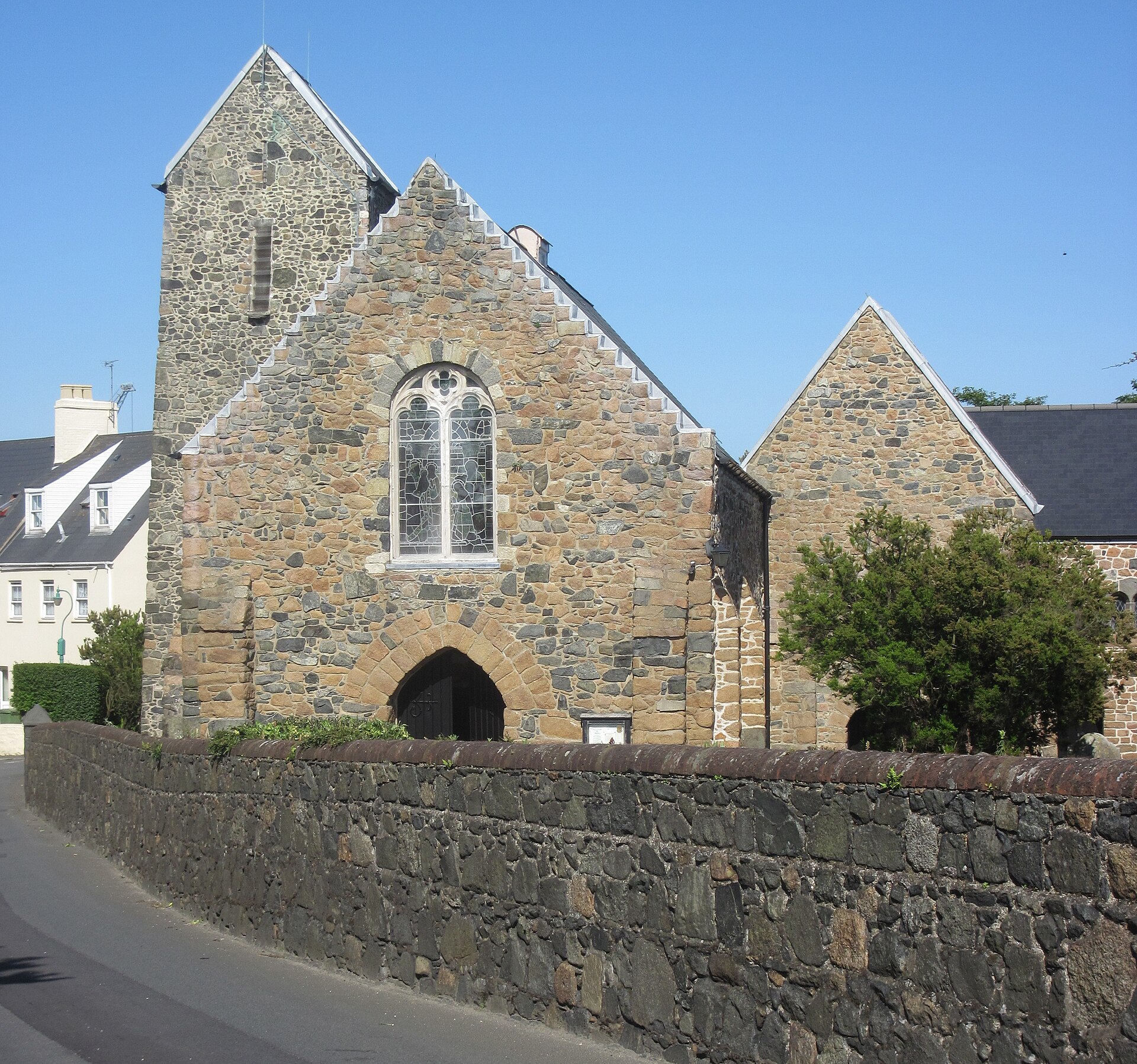
The crusading episode recorded by de La Chesnaye belongs to the transmitted history of the House of Anneville. It connects the family with the wider movement of Norman aristocratic society into the Mediterranean and the Holy Land.
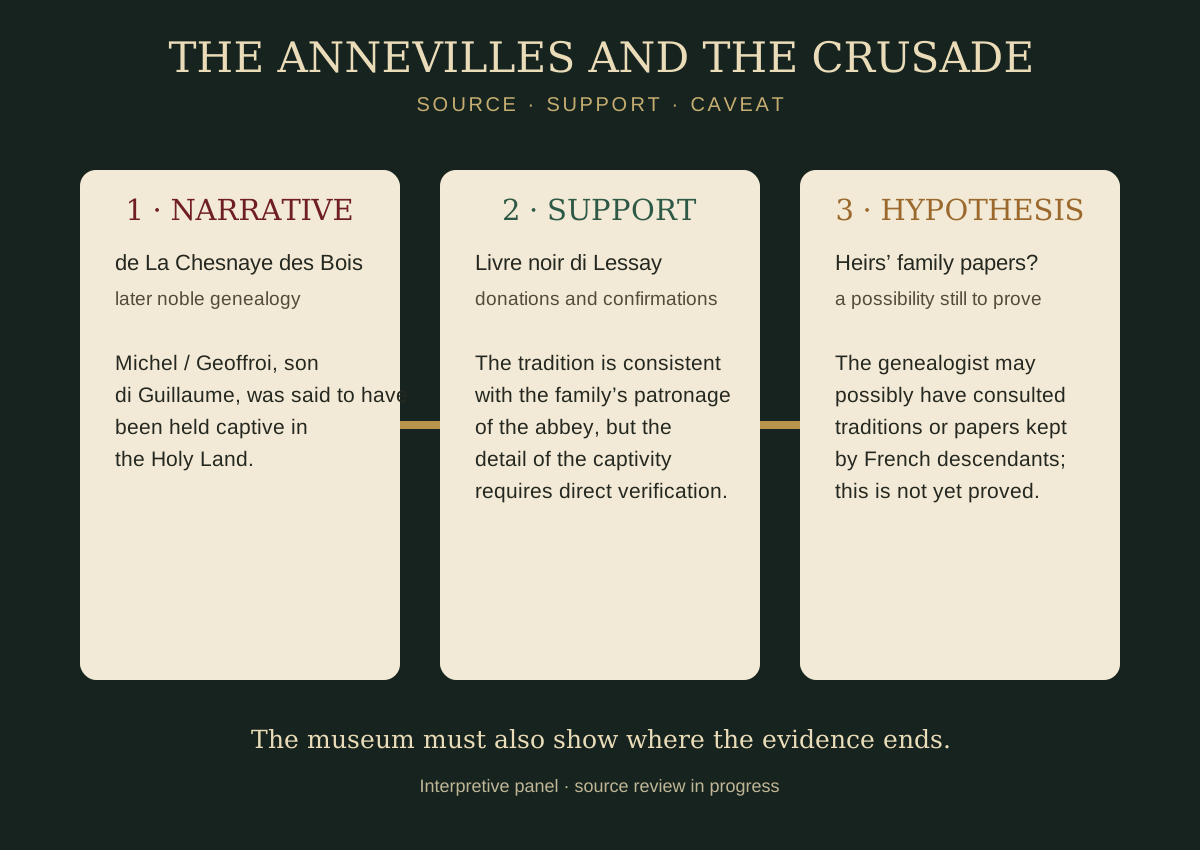
The House of Anneville held the Fief d'Anneville in Guernsey. The continental lineage, the Val de Saire, the Anneville place-name and the island fief together form a continuous Norman seigneurial geography.
In 1106, a man named Willelmus de Annevilla gave the church of Saint Leodegarius of Sarnis, together with a house near the churchyard, to the abbey of Lessay. This gift is recorded in a register of the abbey called the Livre noir, a book in which the abbey wrote down the gifts of land and property it received.
The same register of the Livre noir records two later confirmations of gifts to the abbey: one by Gaufridus de Annevilla in 1108, and one by Joannes de Annevilla in 1139. The three men share the same name, Annevilla, which shows that the name was passed down in the family, but the register does not say exactly how the three men were related to one another.
Charters of the abbey of Saint-Sauveur-le-Vicomte, written between 1154 and about 1180, mention lands in the Cotentin that were called Anneville or Danevilla. Some of these charters are confirmations by the king, others are gifts of land. These documents show that places bearing the Anneville name existed there, but they do not prove that these lands belonged to the same fief or the same family as the one in Guernsey. A fief was a piece of land with the rights attached to it, held from a superior lord in exchange for loyalty and services.
Historical tradition credits Samson d'Anneville with making a grant in Guernsey around 1061. This account preserves the founding memory of the Seigneurie — that is, the fief held by the lord (the Seigneur) of the Anneville family in Guernsey, a piece of land with its attached rights held from a superior lord in exchange for loyalty and services. It stands alongside the later documents that name Anneville, Sampson and the Norman lands.
 Museum reconstruction of the Anneville livery.Image · Museum reconstructionMuseum diagram of the Anneville genealogy.Image · Museum reconstructionMuseum panel on the evidence for the Anneville family and the crusades.Image · Museum reconstructionAnneville genealogy in de La Chesnaye des Bois, Dictionnaire de la noblesse, 1770s edition: a late genealogical source to be checked document by document.Image · Gallica · Bibliothèque nationale de Francede La Chesnaye des Bois - Anneville genealogydocument1770s edition · Open documentLivre noir de Lessay — extractdocument12th century, copy 17th–18th c. · Open documentLivre noir de Lessay — acts of 1106, 1108 and 1139document1106–1139 · Open documentLivre noir de Lessay — transcription and commentarydocumentmodern transcription · Open documentGallia Christiana — dioceses of Rouen, Bayeux, Avranchesdocument18th century · Open documentRecherches sur le Domesdaydocument19th century · Open documentRecueil de documents concernant les abbayes normandesdocument17th–18th c. copy · Open document