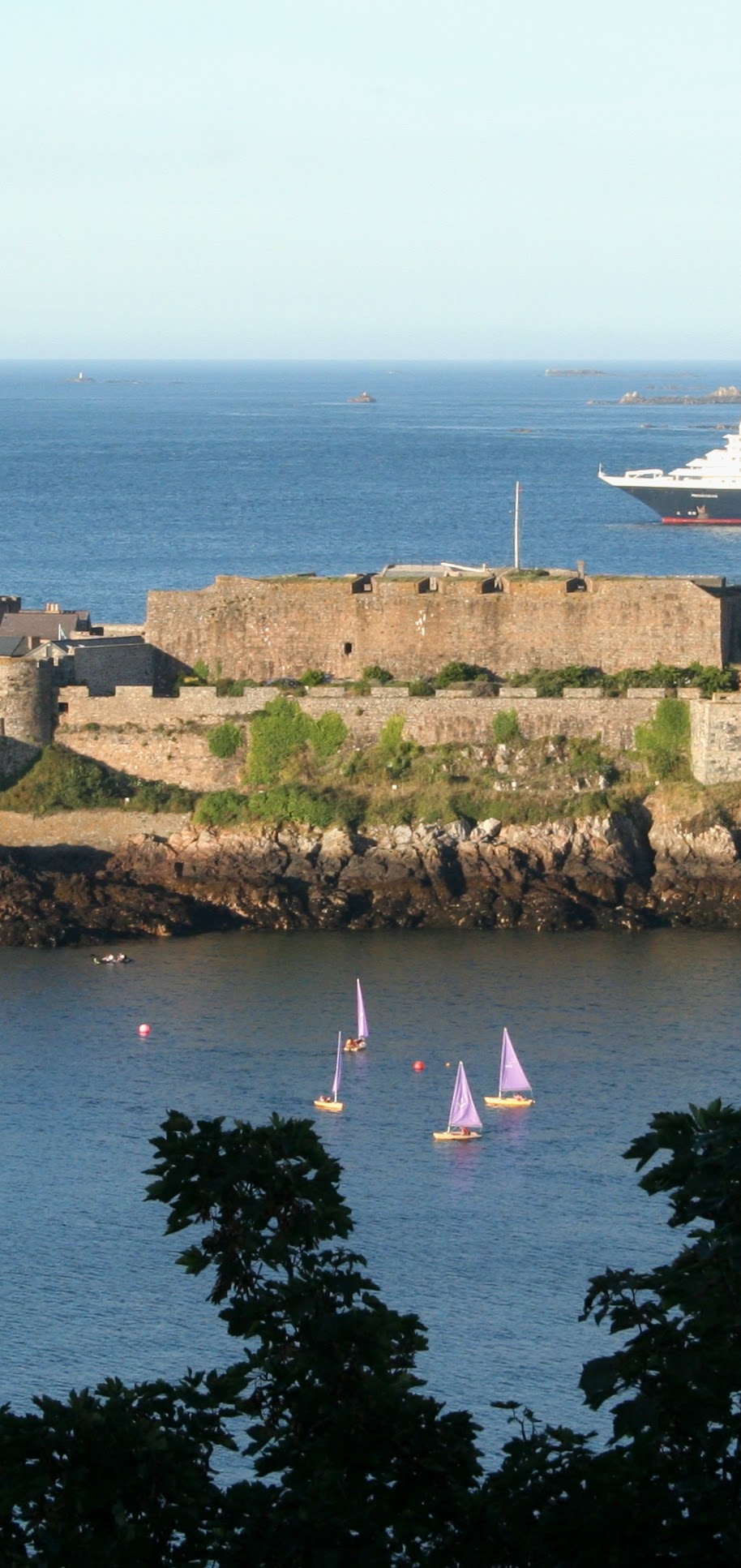
Guernsey in this period
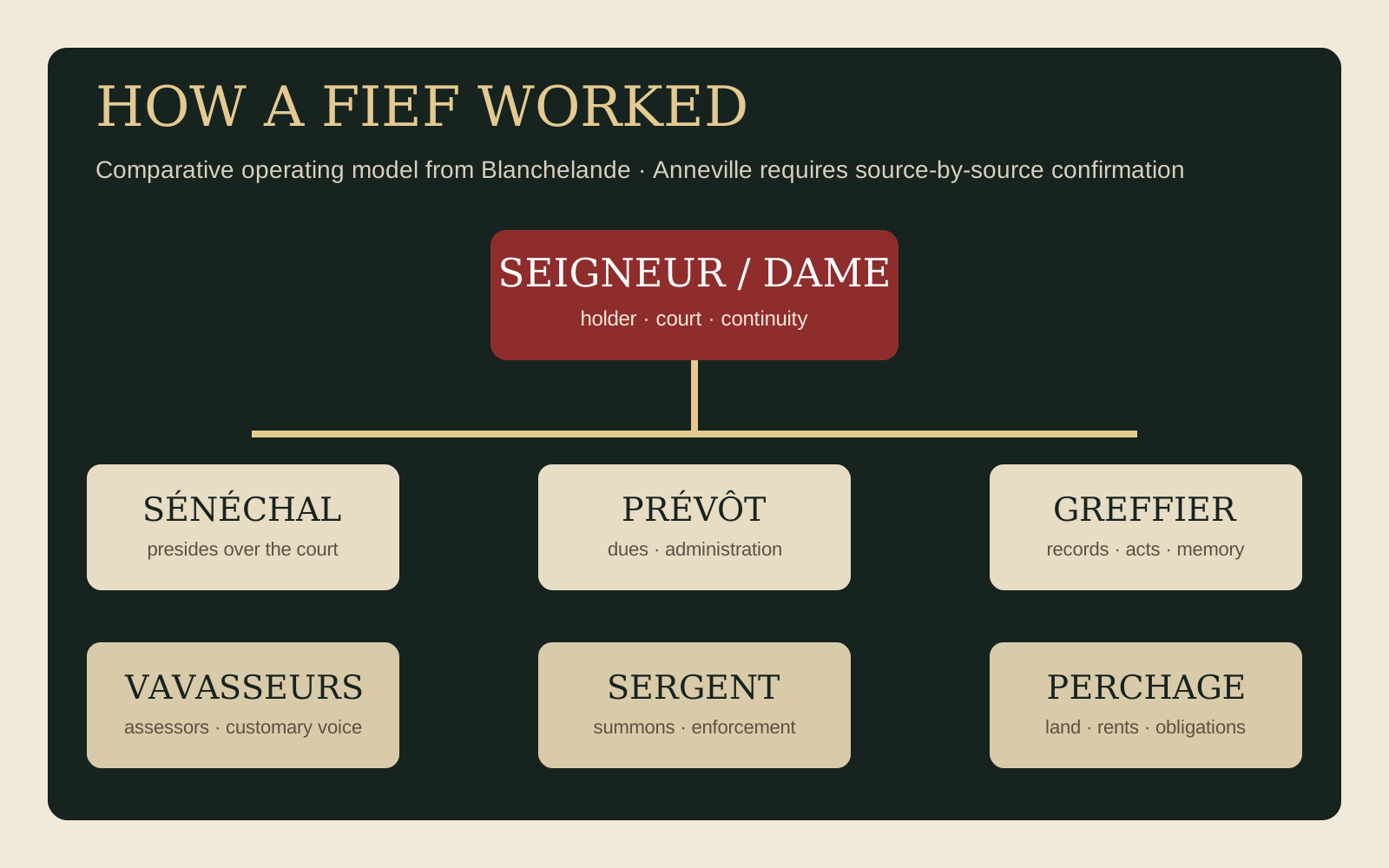
Guernsey’s Norman system works through local courts, manorial centres, officers, rents and practical duties attached to land.
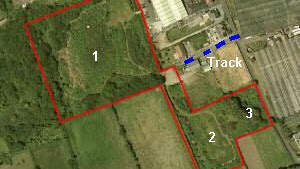
Most of medieval Guernsey — a Channel island closer to France than to England — survives only on parchment. Anneville survives in the landscape. Its Garenne, the warren of the lordship, is still there as a small nature reserve. A nineteenth-century account of the Andros family, who later held the fief, described it as "a curious rabbit warren called 'La Garenne d'Anneville' which is at least six hundred years old." Its charter was the free warren granted on 9 June 1261 by the Lord Edward, son of King Henry III and later King Edward I. Free warren meant the exclusive right to hunt game over the lord's land, and to stop anyone else from taking it.
A privilege in the Middle Ages was never a free gift; it was a bargain, and the lord who granted it wrote the terms. In the feudal system every holding was a promise: a greater lord granted land, and the holder owed him service in return. The royal inquest of 1248, a formal inquiry into what each landholding owed the Crown, lists "the fief d'Anneville" alongside the Prior of St Lenfrey — head of a religious house holding other lands on the island — and Guillaume of the Rohais, another local landholder, as bound to "the treatment of prisoners". The unit of charge was the caruée, a measure of land, and its tenant had a double duty: he guarded the King's prisoners, and he sat with the freemen in the Seigneur's court, the private court where the lord's own tenants answered for their dues. Guarding prisoners was written down like any other rent.
Three places made the lordship visible. The Garenne kept its privilege of game. The Manor House was its seat, complete with chapels, a dovecote for pigeons and a fishpond. And the Court was where the tenants came. Berry, a historian of the island, described that court still sitting at Michaelmas, an autumn feast-day, in 1815, with its seneschal, its vavasors, its clerk and its provost — the full panel of officers is set out in Room 12.
Above all stood the tie to the King himself. The old records, quoted by Samuel Elliott Hoskins, a nineteenth-century writer on Guernsey, say of the fief: "il doit foy et hommage a nostre sire le Roy quand iceluy nostre sire le Roy sera venu en l'ile" — it owes faith and homage to our lord the King when the King shall have come to the island. Berry adds that the Seigneur must then attend the King "as his esquire during his stay", walking beside him as a personal attendant. It is the mark of a well-drafted obligation that it does not depend on being used.
About these lines: a narrative reconstruction written in the manner of C. Northcote Parkinson (1909–1993), Seigneur of the Fief d'Anneville from 1964 to 1987, historian, and author of the novels of Richard Delancey, a Guernsey sailor. Parkinson did not write them and they are not a historical source. They invent no characters and no speeches: every fact comes from the room above, and words in quotation marks are quoted from the documents cited there.
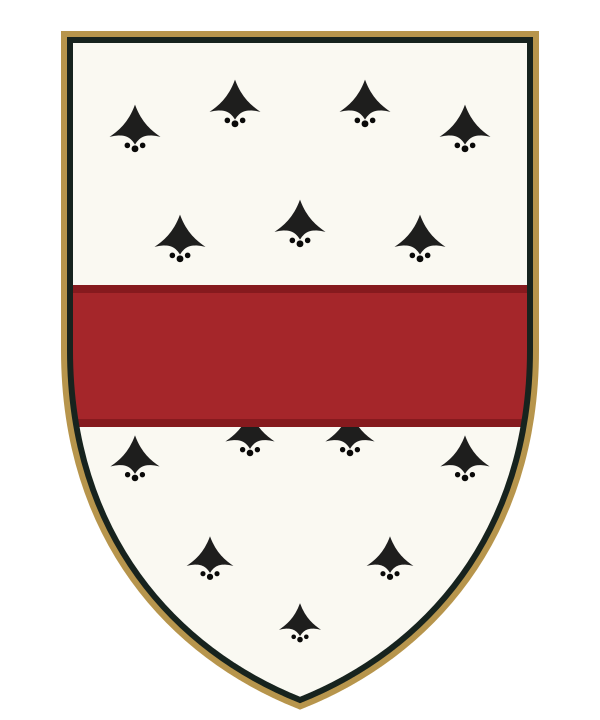 Arms associated with Anneville: ermine, a fess gules
Most of medieval Guernsey survives only on parchment. Anneville survives in the landscape. The Garenne d'Anneville, the warren of the lordship, is still there as a small nature reserve. A nineteenth-century account of the Andros family described it as "a curious rabbit warren called 'La Garenne d'Anneville' which is at least six hundred years old." Its charter is the free warren granted on 9 June 1261 by the Lord Edward, the future Edward I.
Three places made the lordship: the Garenne, where its privilege of game was kept; the Manor House, its seat, with chapels, a dovecote and a fishpond; and the Court, where its tenants answered. Of the Manor House, the piece that still speaks of the Normans is its round-arched stone doorway; the old account of the fief sets it beside the parish church of the Vale for age and form. For centuries the court has gathered before it, as Room 15 tells. Berry described that court as it still sat at Michaelmas in 1815, with "a seneschal, three vavasors, a clerk or greffier, and a provost" (Room 12).
Every favour carried a duty. The royal inquest of 1248 lists "the fief d'Anneville" with the Prior of St Lenfrey and Guillaume of the Rohais among those bound in "the treatment of prisoners". A caruée of land carried the charge: its tenant guarded the King's prisoners and sat with the freemen in the Seigneur's court.
Above all stood the tie to the King himself. The old records, quoted by Samuel Elliott Hoskins, say of the fief: "il doit foy et hommage a nostre sire le Roy quand iceluy nostre sire le Roy sera venu en l'ile", it owes faith and homage to our lord the King when the King shall have come to the island. Berry adds that the Seigneur must then attend the King "as his esquire during his stay."
Extente of 11 September 1248 (Priaulx Library); charter of 9 June 1261; W. Berry, History of the Island of Guernsey (1815), p. 124; S. E. Hoskins, 'The carved chests of the Channel Islands' (Priaulx Library); annals in J. Jacob's volume (Internet Archive annalsofsomeofbr00jacorich), pp. 103-104.The name "Norman arch" is itself a clue. In Normandy this round-headed style is simply called Romanesque; in England and the Channel Islands it is called Norman, because it arrived with the Normans in the eleventh and twelfth centuries. At Anneville that style survives in the doorway of the old Manor House, and the court still gathers in front of it. Here the building and the institution have stayed together.
Guernsey’s Norman system works through local courts, manorial centres, officers, rents and practical duties attached to land.
Anneville lets visitors see Guernsey’s institutions at ground level: manor, court, prison duty, warren, chapel, records and dependent holdings. It converts constitutional history into the daily organisation of an island community.
The documented story of the Fief d'Anneville begins in 1248 with two separate records: a royal charter in which the King granted William de Cheney a rent, and an Extente — a royal survey recording what the island owed the King — which recorded the fief's duty to keep the King's prison. A fief was a piece of land, with the payments and rights attached to it, held from a superior lord in return for loyalty and service; in Guernsey it could be inherited, given, sold and bought like property, but its obligations passed with it. In 1261 Prince Edward granted William de Cheney hunting rights — the privilege later known as free warren, the right to keep and hunt small game on one's own land. By 1299 Philip de Cheney said that the family's charters were kept in England. A copy made in the sixteenth century records a court held at Anneville Manor in 1350 to divide the estate of Guillaume de Cheney: Fief le Comte and the right to live at Anneville had to be treated as separate things. A chapel at St Thomas d'Anneville is recorded in 1498. In 1509/10 (the year then began on 25 March, so dates in January to March carry both years) Robert Willoughby sold Anneville to Nicholas Fouaschin.
In 1299 a man called Philip de Cheney appeared in court and said he could not show the old title deeds for the Anneville properties, because those deeds were kept across the Channel. This suggests that the Cheney family's main home was across the Channel, not in Guernsey.
A copy made in the sixteenth century records that in 1350 a feudal court met at the Manor House of Anneville to divide up the estate of Guillaume de Cheney between his heirs. A fief is a piece of land with the rights attached to it, held from a superior lord in return for loyalty and services; a lord could hold a court for the people living on his fief. This division of an inheritance is called a partage.
The Cartulaire records that Sir Edmond Chaenay received Fief le Comte in the 1350 partage, the division of Guillaume de Cheney's estate.
Carey reports that when Sir Edmond was in Guernsey, he could use the Manor House of Anneville and the lands next to it as his residence.
In 1498 Edmond de Cheney, the holder of Fief d'Anneville, asked the Bishop of Coutances to appoint Dom John Hardy as chaplain of St Thomas d'Anneville. This shows that the manor had its own chapel.
On 16 February 1509/10 (old-style dating: the year then began on 25 March, so dates in January–March carry both years), by a formal deed called an indenture, Robert Willoughby, Lord Willoughby de Broke, sold Fief d'Anneville to Nicholas Fouaschin, a Guernsey merchant who also served at the court of King Henry VIII. The fief, with its dues and obligations, passed with the sale.
The Court of Chief Pleas (Guernsey) Law, 2004 — a modern law of the island — lists Anneville among the fiefs nobles (noble fiefs) whose holders owe suit of court, meaning they must attend and answer when called by name at Chief Pleas, the solemn sessions of the Royal Court, Guernsey's own court presided over by the Bailiff with the Jurats (the island's judges).
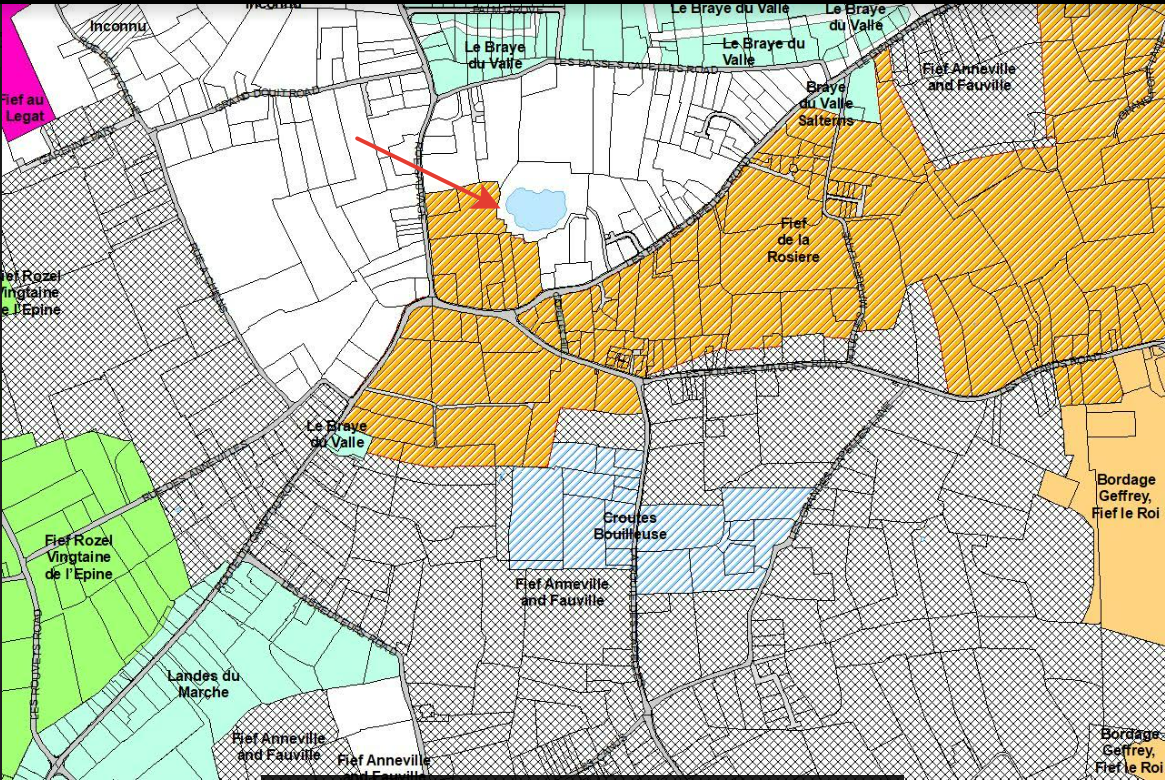
A Livre de Perchage is a survey book listing every plot of land in a fief, its tenant and what he owed. The land it records is not automatically the complete extent of the fief's jurisdiction, nor a measure of the fief's feudal rank.
On 9 June 1261 Prince Edward granted William de Cheney free warren — the right to keep and hunt small game on his land. This was a hunting privilege granted by the Crown; it was not a general synonym for owning all the land in the Seigneurie.
The Extente of 1406 — a royal survey recording what the island owed the King — attributes free warren, a right of chase and market-related lands to the Seigneurie.
The Feudal Dues (Guernsey) Law, 1980 modernised the money payments attached to the fiefs while keeping the titles of Seigneur (the holder, or lord, of a fief) and Dame (his female counterpart) in use. It should not be summarised as wiping away every seigneurial or constitutional feature.
A cross-room installation reconstructs court, officers, land census, measures, dues and ritual meals. Blanchelande is used as a teaching comparison; a practice is attributed to Anneville only when an Anneville source confirms it.
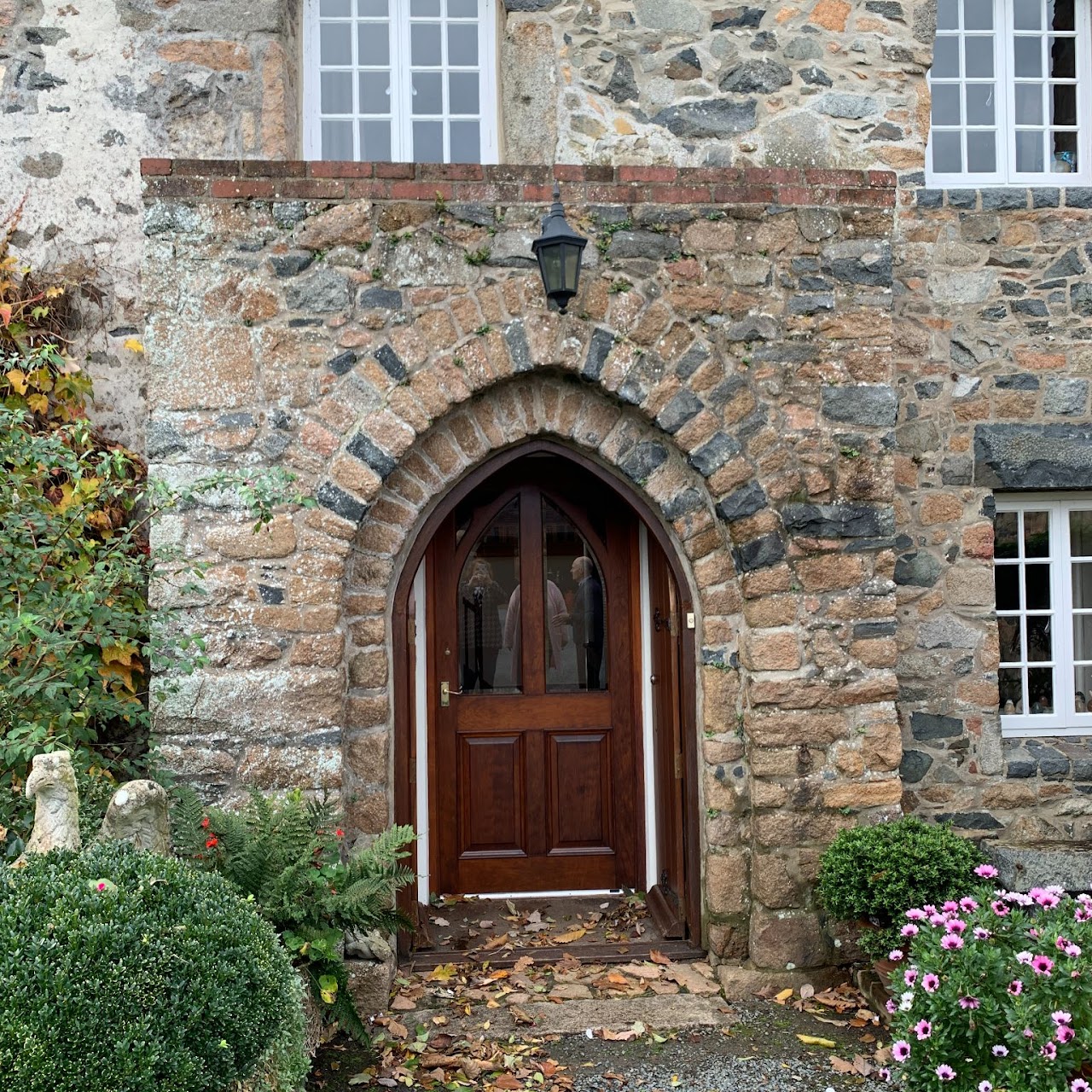 The Norman arched doorway of the Manor House of Anneville.Image · lordofanneville.com · Our territory in Guernsey
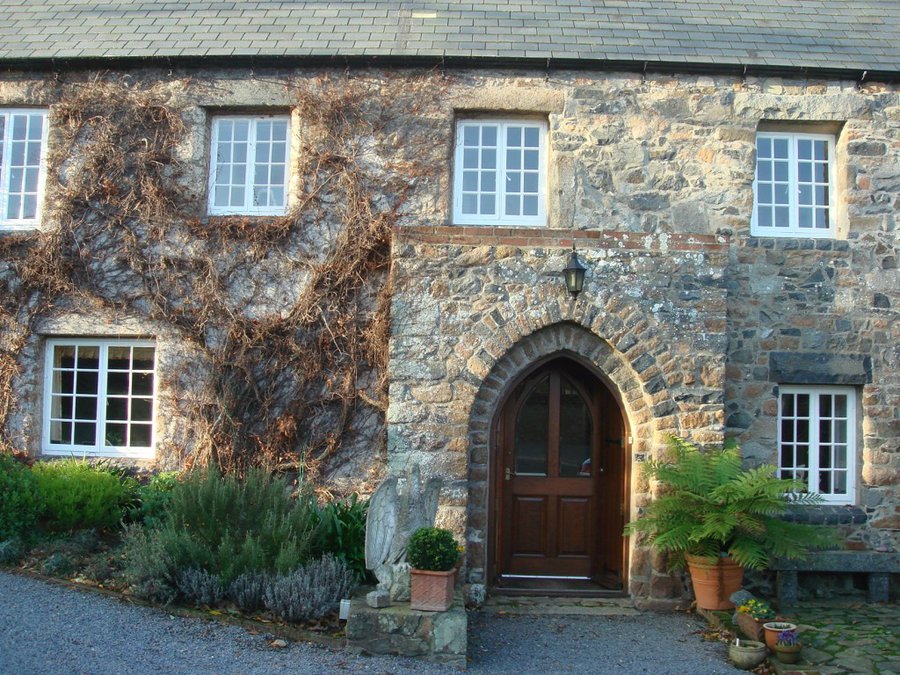 The Manor House of Anneville today. For centuries the Manorial Court sat here at Michaelmas.Image · lordofanneville.com · 960 years of history
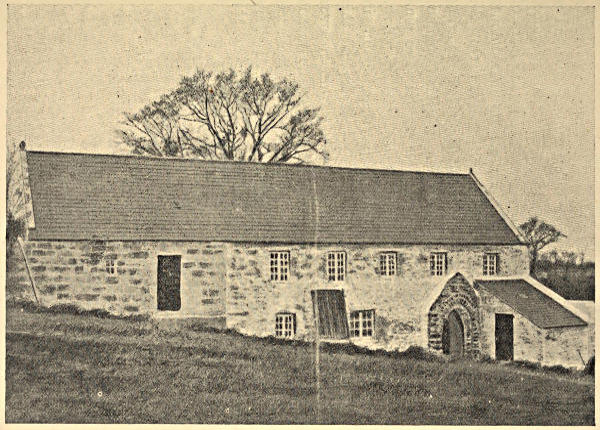 Old Manor House, Anneville. Illustration from Sir Edgar MacCulloch, Guernsey Folk-Lore, 1903.Image · Project Gutenberg · public domain
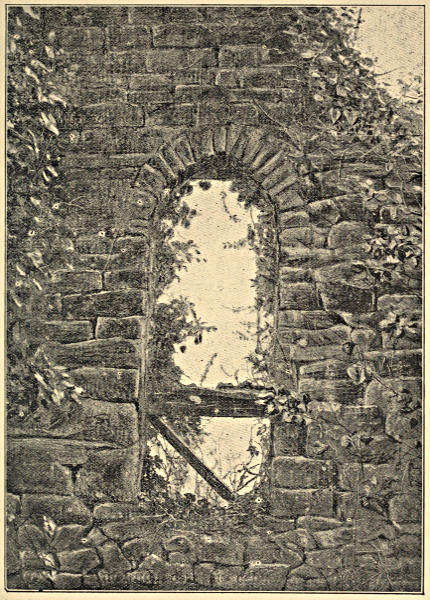 Oratory window in the ruined chapel at Anneville. Illustration from Sir Edgar MacCulloch, Guernsey Folk-Lore, 1903.Image · Project Gutenberg · public domain
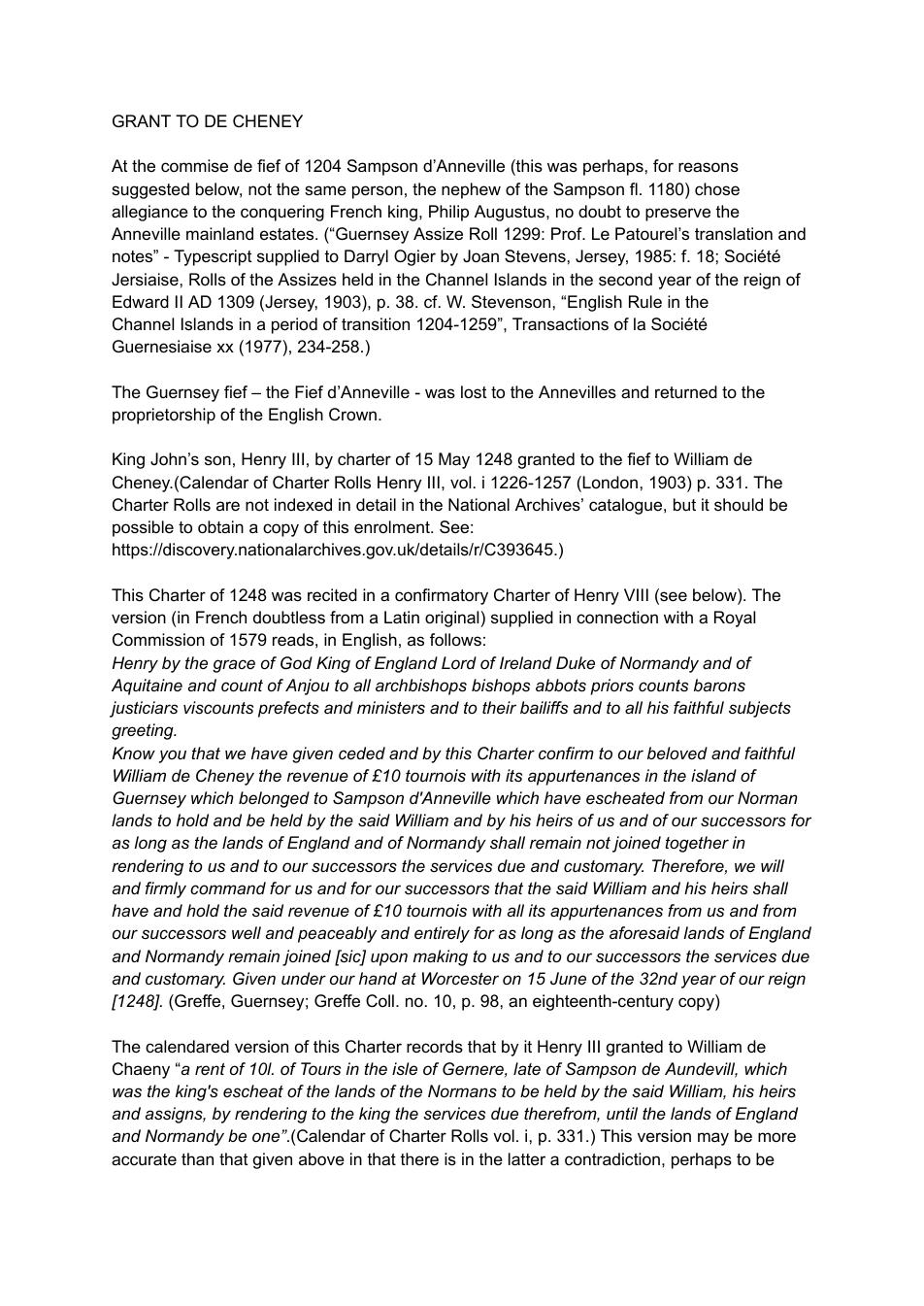 Grant to de Cheney - collected sourcesdocument13th century · Open documentAnneville cadastral mapterritorymodern Cadastre · Open documentCurrent registered territorial representation
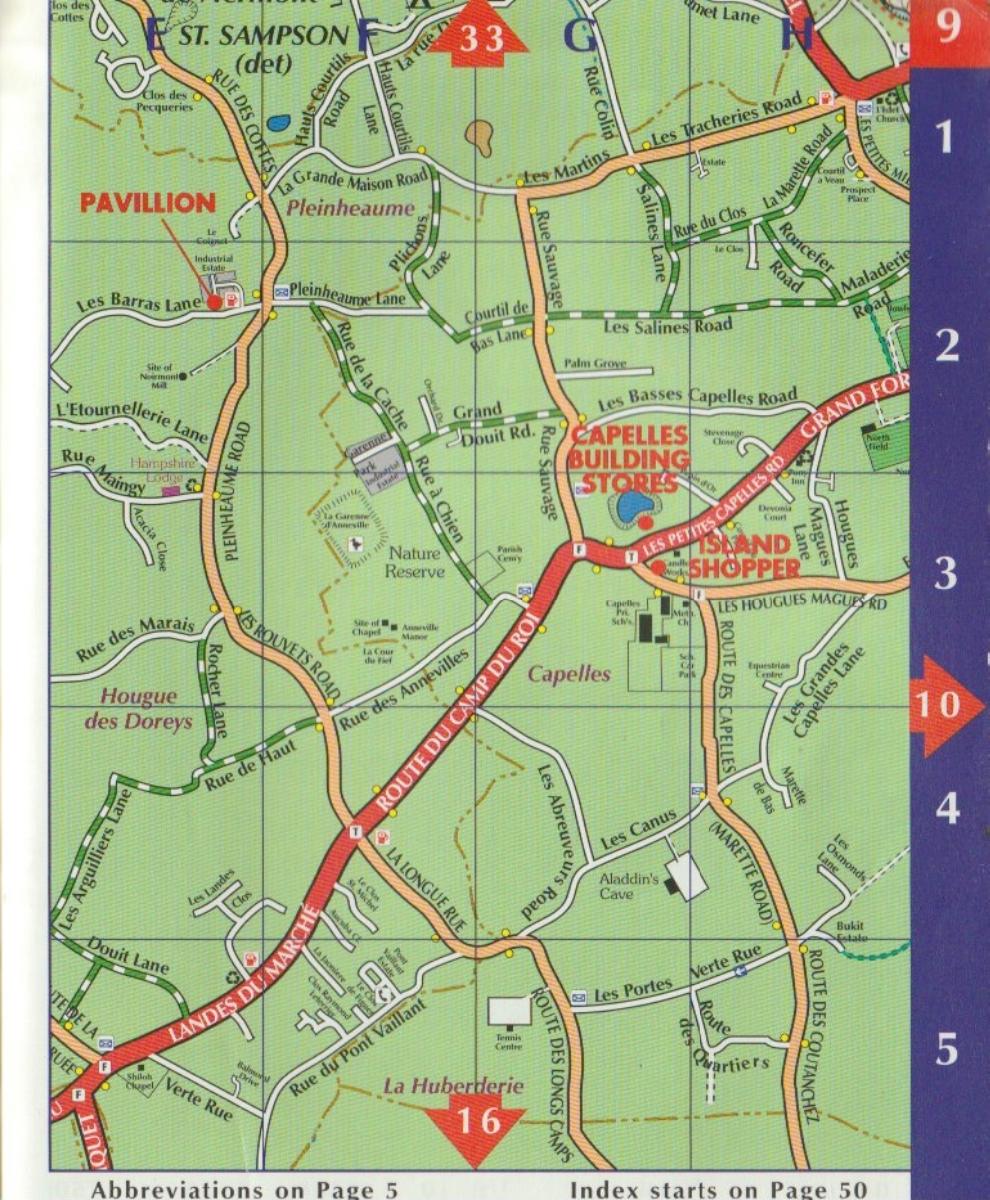 Anneville Manor mapterritorymodern archival map · Open documentManor and property context; distinct from the complete fief
 Fief de Blanchelande: comparative living-fief studycomparative2012 publication · Open documentComparative model only: its practices are not automatically attributed to Anneville
 16 February 1509/10, Indenture between Robert… (AQ 0096/01-01)archive16 February 1509 · Open document16 February 1509/10, Indenture between Robert…