Guernsey in this period
Guernsey’s maritime families participate in the expanding Atlantic world of the seventeenth century.
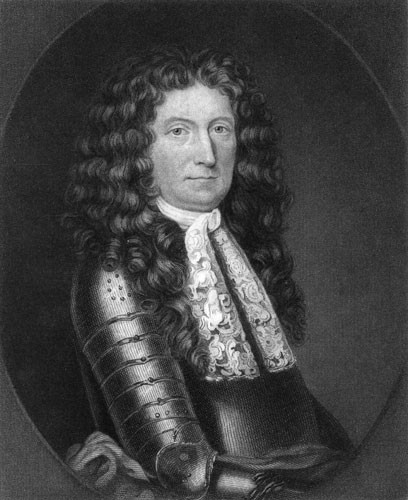
On 4 October 1680, at the Chief Pleas of Guernsey, the lordship of Anneville was answered for by a man who held it through his wife. Guernsey lies in the Channel, a few hours' sail from Normandy, under the Crown. The Chief Pleas were the assembly where the island's landholders appeared and answered for their lands; the holder of a fief — an estate granted by a higher lord, carrying rights over tenants and duties towards the Crown — answered as its Seigneur. The man in question was Charles Andros, brother of Amias Andros, a Guernsey family of the gentry. Charles had married Alix Fashion, the woman who had inherited the seigneurie of Anneville, and the record duly calls him Charles Andros, Esquire, Seigneur d'Anneville, by his wife's right.
The Andros family produced one of the most travelled governors of the seventeenth century. Sir Edmund Andros, son of Amias and nephew of Charles, was in turn Governor of New York, of New England, and of Virginia and Maryland — the chief officer of each of those American colonies. The resemblance between his two worlds was close. A Guernsey fief and a colonial government had the same shape: a territory under one jurisdiction, a court, an officer to preside over it, and subjects who owed obedience. A family that had managed the first could manage the second.
In 1683 Sir Edmund acquired an island nearer home. He purchased the governorship of Alderney, a small Channel Island, from the widow of Sir George Carteret, a royalist statesman who had held it under the Crown. On 28 April 1683 King Charles II granted Alderney to Sir Edmund and his wife Mary by letters patent — a formal royal document — for ninety-nine years, at a rent of thirteen shillings. That separate government later passed to the Le Mesurier family, a Guernsey family of office-holders and merchants, and ended only in 1825.
The Atlantic governor came home at last. In 1704 Sir Edmund was appointed Lieutenant-Governor of Guernsey, the King's deputy in the island, and he was Bailiff — the island's chief legal officer and president of its courts — at his death in London in 1714, at the age of seventy-six. His will required his nephew to "build a good suitable house on or at the Manor of Samares", a manor in the parish of Saint Martin on Guernsey. The island that had sent him out to govern a continent received him back as its chief magistrate.
About these lines: a narrative reconstruction written in the manner of C. Northcote Parkinson (1909–1993), Seigneur of the Fief d'Anneville from 1964 to 1987, historian, and author of the novels of Richard Delancey, a Guernsey sailor. Parkinson did not write them and they are not a historical source. They invent no characters and no speeches: every fact comes from the room above, and words in quotation marks are quoted from the documents cited there.
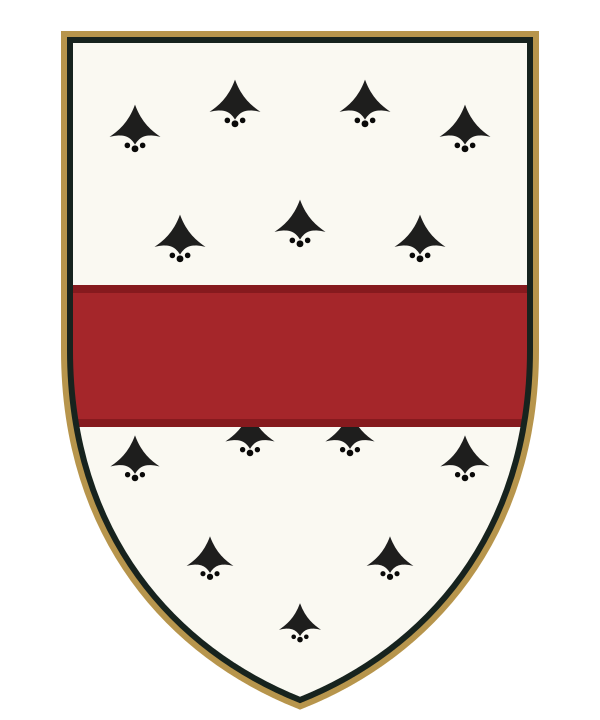 Arms associated with Anneville: ermine, a fess gules
Small islands have always supplied governors to larger places, and the Andros family supplied one of the most travelled men of the seventeenth century. Sir Edmund Andros, son of Amias Andros, was in turn Governor of New York, of New England, and of Virginia and Maryland. His uncle Charles Andros, brother of Amias, held Anneville by his marriage with Alix Fashion, the heiress of the seigneurie; at the Chief Pleas of 4 October 1680 the Seigneur d'Anneville answered as Charles Andros, Esquire, by his wife's right.
A Guernsey fief and a colonial government had the same shape: a jurisdiction, a court, an officer to preside, subjects who owed obedience. A family schooled in the first could manage the second. Nearer home, Sir Edmund bought the governorship of Alderney from the widow of Sir George Carteret, and on 28 April 1683 Charles II granted the island to him and his wife Mary by letters patent for ninety-nine years, at a rent of thirteen shillings (AQ 0647/05-07). That separate government passed to the Le Mesuriers and ended only in 1825.
The Atlantic governor came home at last. In 1704 he was appointed Lieutenant-Governor of Guernsey, and he was Bailiff at his death in London in 1714, at the age of seventy-six. His will required his nephew to "build a good suitable house on or at the Manor of Samares". The island that had sent him out to govern a continent received him back as its chief magistrate.
AQ 0647/05-07 (letters patent of 28 April 1683); Chief Pleas, 4 October 1680; annals in J. Jacob's volume (Internet Archive annalsofsomeofbr00jacorich), pp. 102-104.The Andros served the English Crown across the Atlantic, but at home they held Anneville under Norman custom and answered at courts that worked in French. Sir Edmund Andros governed New York and New England; his family's seigneurie in Guernsey remained a Norman fief. The double loyalty born in 1204, Norman law under the English Crown, can be seen here in a single family.
Guernsey’s maritime families participate in the expanding Atlantic world of the seventeenth century.
Through Sir Edmund Andros, Guernsey opens to America. A family rooted in the island’s seigneurial society becomes involved in the government of New York, New England and other colonies, projecting Guernsey into Atlantic history.
Between 1630 and 1714, the fief called Anneville — a piece of land in Guernsey together with the rights attached to it — was at the centre of a long process in which the relations between the Andros family and the Priaulx family, the two families who held fiefs here, were settled anew. In 1630, when Fief le Comte was sold, the seller kept Anneville for himself instead of transferring it with the sale. In 1641 the Royal Court — Guernsey's own court of justice, presided over by the Bailiff with the Jurats, the island's judges — examined what payments were owed for Anneville. In 1662 the Douzeniers, the elected members of a parish council, were called to take part in a perchage, a survey listing every plot of land in the fief, its tenant and what he owed. In February 1668/69 (the year then began on 25 March, so dates in January–March carry both years) the Royal Court decided that the fief called Longues belonged to Charles Andros in right of his wife. In 1672 a deed called the Transaction was made; its original has not been found. In 1677 agreements were drawn up naming several fiefs. In 1680 Charles Andros appears as Seigneur — the holder, or lord, of a fief — of Anneville and as lieutenant (deputy) of Sir Edmund Andros. In 1714 the Andros side printed a written statement of their case, setting out their claim that Anneville was the head manor of the area; this was one party's argument, not a court decision.
In 1662 the Douzeniers — the elected members of a parish council — were summoned for a perchage of Anneville, a survey listing every plot of land in the fief, its tenant and what he owed. We do not know whether the survey was actually carried out. In February 1668/69 (the year then began on 25 March, so dates in January–March carry both years) the Royal Court — Guernsey's own court of justice, presided over by the Bailiff with the Jurats, the island's judges — decided that the fief called Longues belonged to Charles Andros in right of his wife. A summons, the carrying out of a survey and a court decision are three different steps, and they are kept distinct here.
In 1672 a deed called the Transaction was made; its original has not been found. In 1677 the two sides drew up Articles of Agreement naming several fiefs — pieces of land in Guernsey held with the rights attached to them. The list of fiefs in these agreements does not, by the mere fact of being listed, establish a hierarchy among them, that is, it does not by itself show that one fief depended on another. The agreements serve to show what property and rights were the material object of the negotiations.
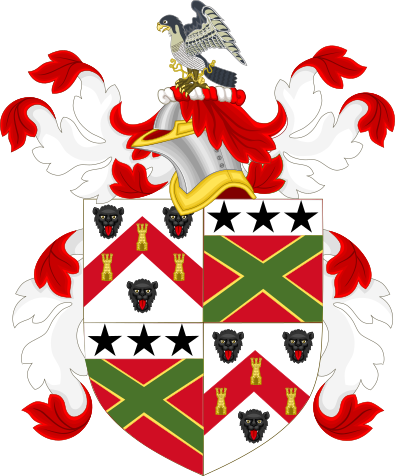
In 1680 Charles Andros appears as Seigneur — the holder, or lord, of a fief — of Anneville and as lieutenant (deputy) of Sir Edmund Andros. In 1714 the Andros party printed a memorial, a written statement of their case, in which they presented Anneville as the principal fief, the head manor. This formula was a legal argument put forward by one side in the dispute; it was not a judgment by any court.
On 21 June 1662 the Seigneur of Anneville — the lord of that fief, a piece of land with the rights attached to it — called together the Douzeniers, the elected parish councillors, to carry out a perchage: a survey listing every plot of land in the fief, its tenant and what he owed. This happened as part of a legal dispute between Charles de la Marche and Charles Andros.
In February 1668/69 (the year then began on 25 March, so dates in January to March carry both years) the Royal Court — Guernsey's own court of justice, presided over by the Bailiff, the island's chief magistrate, with the Jurats, judges chosen from among the islanders — decided that the Fief of Longues belonged to Charles Andros through his wife, deciding the case against Pierre Priaulx.
On 8 December 1677 Charles Andros and Peter Priaulx signed Articles of Agreement. An attachment to this document named the fiefs of le Comte, Pommare, Longues, Au Miere, Bequetez and Crochon — fiefs being pieces of land with the rights attached to them.
On 3 July 1680 an act was drawn up under the seal of the Bailiwick. In it Charles Andros is described as Seigneur of Anneville — the lord of that fief, a piece of land with the rights attached to it — and as lieutenant of Sir Edmund Andros, that is, the person acting in Sir Edmund's place.
On 16 December 1714 the Andros party issued a printed memorial — a printed statement setting out their case. In it they described Anneville as a fief held directly from the Crown, the King himself, rather than from another lord. They argued that Anneville was the principal fief, standing above the other fiefs, which were subordinate and owed homage and dues to it. Homage is the formal promise of loyalty made by a vassal to his lord, and dues are the payments owed by a fief or its tenants.