 Arms associated with Anneville: ermine, a fess gules
Evidence and interpretation
The Court and Jurisdiction of Anneville: from 1682 to today, under one arch
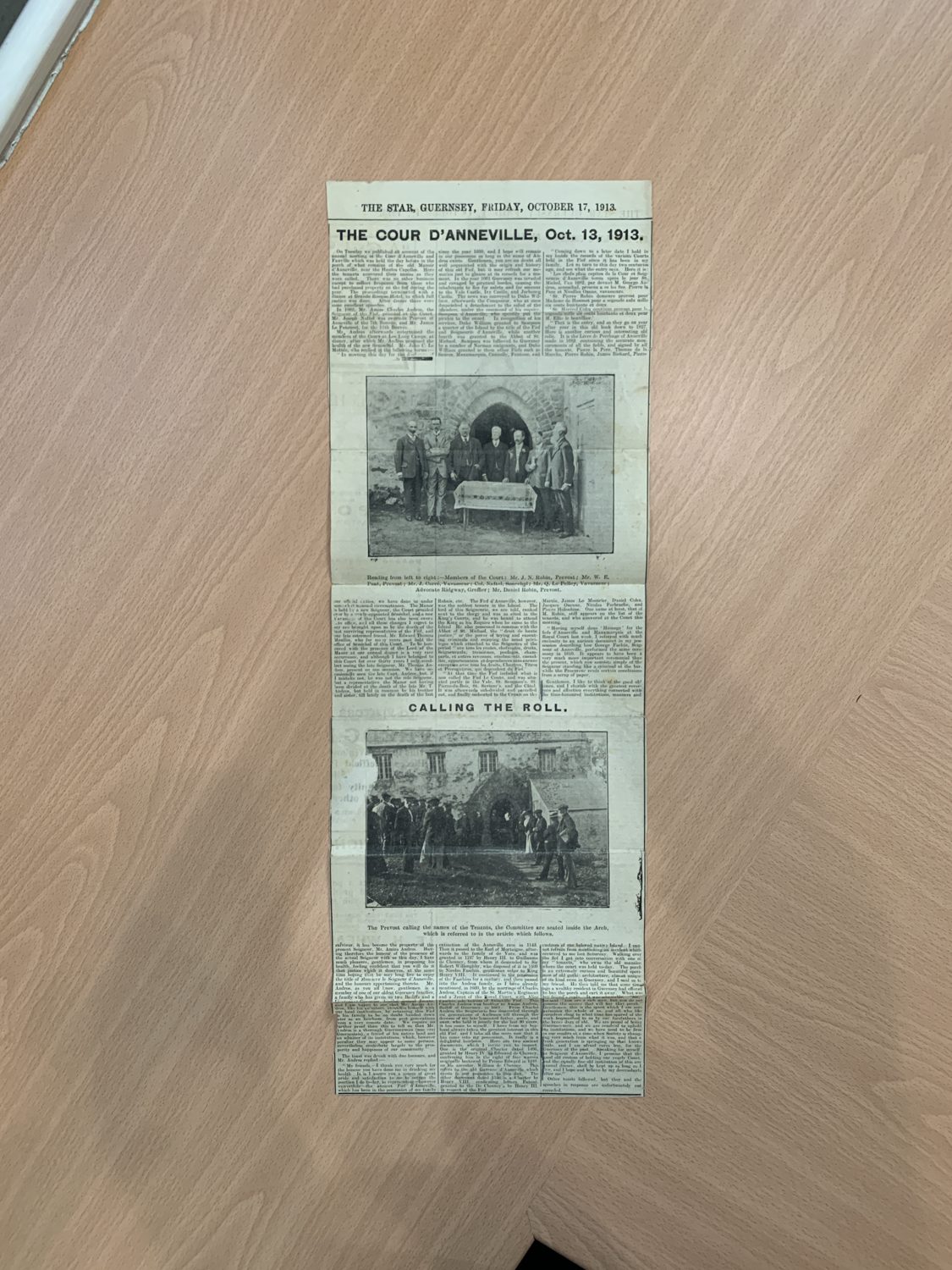
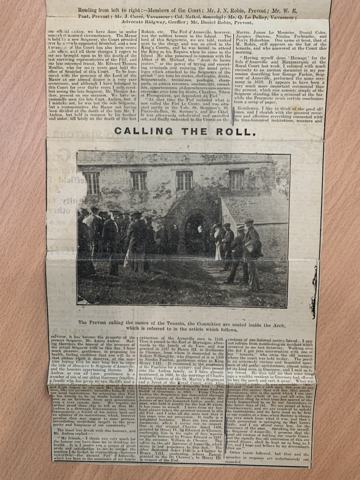
Monday 13 October 1913, near the Hautes Capelles. Under the round Norman arch of what had once been the manor house of the lords of Anneville, seven men sit on a bench. One of them opens a book and begins to call names. Those present answer. A photographer from The Star is there, and his picture hangs in this room. The men are doing what was done on the same spot in 1682.
A feudal court is the yearly assembly of a fief. Everyone who holds land of the Seigneur must appear, answer to his name, declare what he holds and pay what he owes. The court also swears in its own officers and settles questions between the lordship and its tenants. At Anneville its full name stands at the head of the proceedings of 22 October 1956: "Cour et Juridiction du Fief d'Anneville". In these papers the jurisdiction is the land and the people who answer to that court: the Fief d'Anneville and, with it, the Fief de Fauville, each with its own Prévôt.
The court has a fixed place and a fixed season. A history of the fief kept in the same file quotes a lease of 1755: the tenant of the old house accepts that "la Cour du fief d'Anneville se tiendra de droit comme d'ancienneté dans la vieille maison du présent bail", and must provide a bench for it. The same history describes the spot. The old house had become a stable, but "the old doorway, so like the west door of the Vale Church, of which it may be contemporary, still remains". The Vale Church, the old priory church of the monks of Mont-Saint-Michel, goes back to the Norman centuries. "In the porch of this house the Court of Anneville sits as it has done from time immemorial." The caption in The Star of 1913 says it in a few words: the roll was called with the court "stationed inside the Arch". A round Norman arch, and in front of it a court of the Norman kind: at Anneville stone and custom meet in one place. The season is autumn. The "Chefs Plaids Capitaux", the chief sittings, are held after Michaelmas, the feast of St Michael on 29 September. The dates in this room are 9 October 1820, 13 October 1913, 19 October 1953, 22 October 1956 and October 1982.
Five offices make the court. The Sénéchal presides and judges. Two Vavasseurs sit beside him as judges; when the Sénéchal is absent the first of them takes the chair, as Jean Mahy did in 1820, "premier Juge en séance". The Greffier keeps the register, says the prayer and administers the oaths. The Prévôts summon and collect, and one of them is also Grenetier, keeper of the grain rents. A Sergent attends. The handwritten lists in this room name the holders of these offices from 1670 to 1967, and they show a career: the same man is Greffier in 1848, Vavasseur in 1868 and Sénéchal in 1882.
The sitting follows an order that the papers of 1953, 1956 and 1982 repeat almost word for word. The Sénéchal asks the Prévôt whether the Seigneur will attend. In 1956 the answer was: "Pas aujourd'hui, Mons. le Lieutenant Sénéchal." The Greffier says the customary prayer and calls the roll. New officers take their oath, which ends "Ainsi Dieu vous soit en aide! Dieu sauve la Reine!" Then come the aveux, the declarations by which tenants acknowledge what they hold, the fines, and whatever the court must decide. In 1820 it decided that a piece of furze land called "le bas du mur" would no longer pay champart, the share of the crop due to the Seigneur, after proof of forty years' enjoyment. In 1913 there was "no other business except to collect fivepence from those who had purchased property on the fief during the year". A blessing closes the sitting, and the court goes to dinner.
The Seigneur rarely sat. When Amias Charles Andros presided in 1882, the new Sénéchal called his presence "a very rare occurrence". That day the Seigneur read aloud, from the register kept in his family, the entry of two centuries before: "Les chefs plais capitos de la Cour et Seigneurie d'Anneville tenus après le jour St. Michel, l'an 1682, par devant M. George Andros, seneschal". The register, he said, ran on year after year to 1827.
In 1953 the court set out to show the island what it was. On 19 October, in the doorway of the stable that stands where the manor stood, the Sénéchal H. J. Blampied opened the sitting, and Advocate W. H. Langlois was sworn in as Lieutenant-Sénéchal, escorted by a Prévôt with a drawn sword-stick. Then tenants in smocks and top hats came to the bar of the court and paid their dues in kind: fowls, eggs, potatoes, a coil of rope. One was fined for bringing scraggy birds. The broad beans were measured in the old wooden measures. The Guernsey Evening Press reported it the next day under the headline "Effort to keep Island tradition alive".
The court did not end with the Andros family. The last papers in the file are of October 1982. They are headed "Cour et Jurisdiction du Fief d'Anneville" and "Acte à la Cour des Fiefs d'Anneville et de Fauville", and the Seigneur they name is Cyril Northcote Parkinson, the historian of Room 14. At those Chefs Plaids a new Greffier, John Auguste Le Flem, took the oath. The court of 1682 was still sitting three hundred years later. A court of this kind belongs to its fief and passes with it.
The court has not ended. Today the Cour d'Anneville works through two offices. The Greffe, the court's registry, keeps its registers and archives and maintains this museum (greffier@lordofanneville.com). The Office du Sénéchal, named after the steward who once presided over the sittings, leads the court's projects and relations. Three decrees of 2026 set how the court registers, writes and communicates its letters. In 2026 the Cour wrote to the States of Guernsey, to the Région Normandie, to the departmental archives of the Manche and to the Constables of St Sampson, and the Région Normandie replied that it was ready to list this museum among the resources of MILLENIUM 2027, the European Year of the Normans. The round arch under which the court once called its roll is still its emblem: it heads the letters the Cour sends today.
Every sheet of the file is shown below, with a note that says what it is. The originals are at the Island Archives of Guernsey under the reference AQ 1324/03, "Fiefs d'Anneville & Fauville". Read together, they are the working memory of the court: how it is called, who sits, what is said, and in what order.
Island Archives, Guernsey, AQ 1324/03 (Fiefs d'Anneville & Fauville): extract of the Chefs Plaids of 9 October 1820; The Star, 12 October 1882 and 17 October 1913; Guernsey Evening Press, 20 October 1953; order of proceedings of 22 October 1956 and of October 1982; lists of officers, 1670–1967; typescript "Le Fief d'Anneville".What is specifically Norman in this room
What is most specifically Norman in this room is the court itself. Its name, Chefs Plaids, its officers, the Sénéchal, the Vavasseurs and the Prévôts, and the language of its records, French, all come from the feudal custom of Normandy as Guernsey kept it after 1204. In mainland Normandy courts of this kind disappeared with the French Revolution, when seigneurial justice was abolished in 1790. At Anneville the court has gone on meeting.
Original documents
 Map of the fiefs of Guernseyofficial interactive mapCadastre compilation · Open documentOfficial States of Guernsey Cadastre ArcGIS map — island-wide fief context
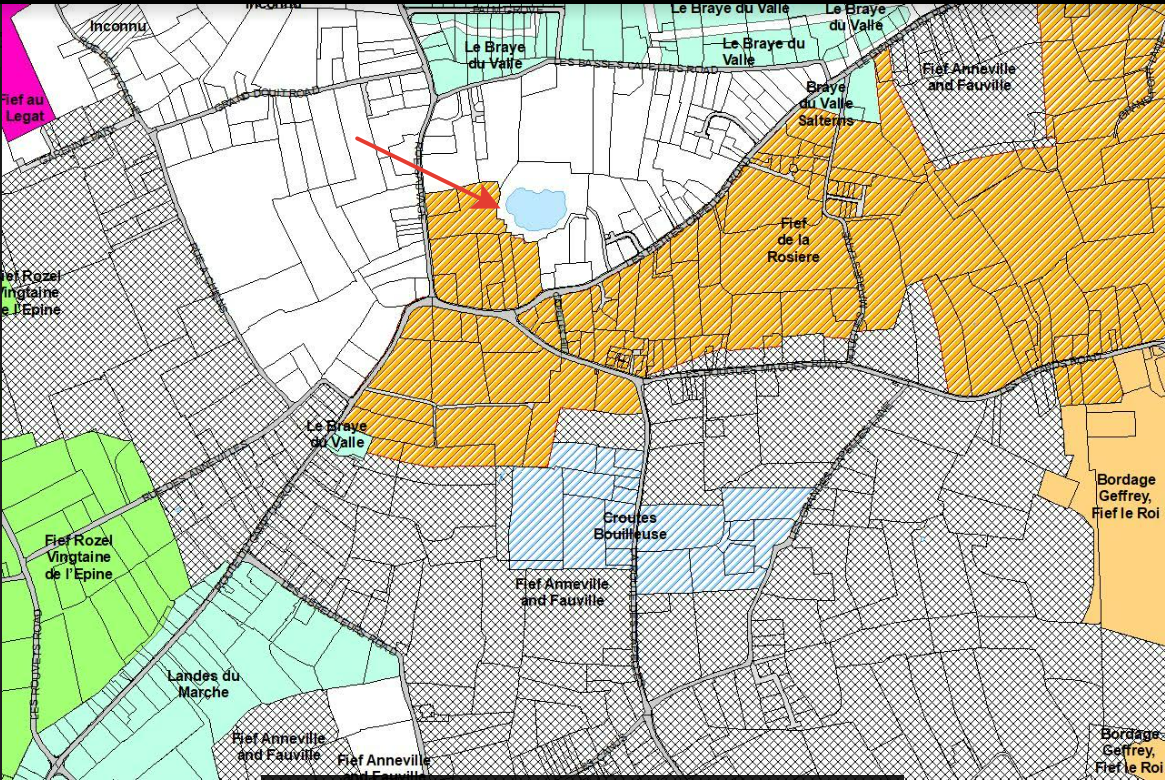 Anneville cadastral mapterritorymodern Cadastre · Open documentCurrent registered territorial representation
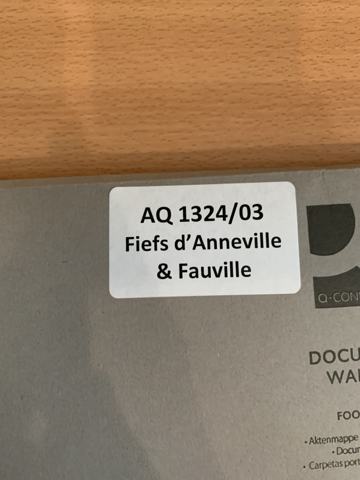 The label of the file: "Fiefs d'Anneville & Fauville"labelarchive label · Open documentThe archive label of the file. The Island Archives keep these papers under the reference AQ 1324/03, with the title "Fiefs d'Anneville & Fauville": the two fiefs that answer to one court.
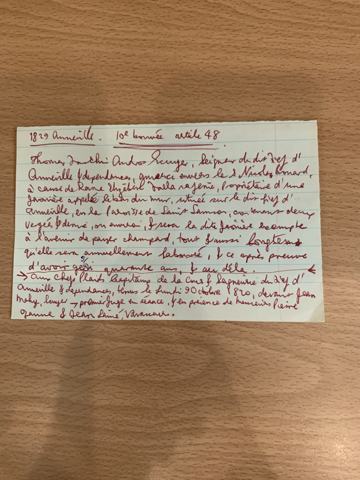 Chefs Plaids of 9 October 1820: a decision of the Courtact of the Court9 October 1820 · Open documentA handwritten extract of a decision taken "aux Chefs Plaids Capitaux de la Cour et Seigneurie" on Monday 9 October 1820, before Jean Mahy, "premier Juge en séance", and two Vavasseurs. The Court frees a piece of furze land called "le bas du mur", in St Sampson, from champart (the share of the crop due to the Seigneur) after proof of forty years' enjoyment. This is the Court at work: it decides what the land owes.
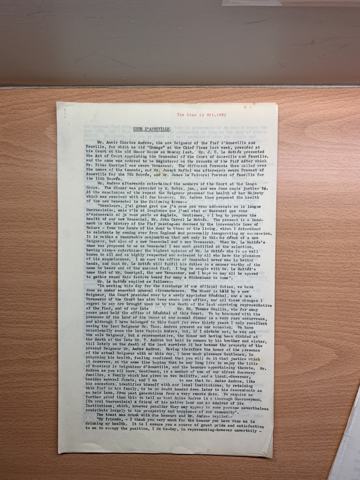 The Star, 12 October 1882: a new Seigneur holds his Courtnewspaper12 October 1882 · Open documentThe Star reports the Court held "on Monday last" at the old Manor House by the new Seigneur, Amias Charles Andros, who had done homage at the Chief Pleas the week before. Mr J. C. Le Mottée presents his act of appointment as Seneschal "of the Court of Anneville and Fauville", and it is ordered to be entered in the registers of the Fief. A Vavasseur is sworn, and two Prévôts: one for a bouvée of Anneville, one for a bouvée of Fauville. A dinner follows.
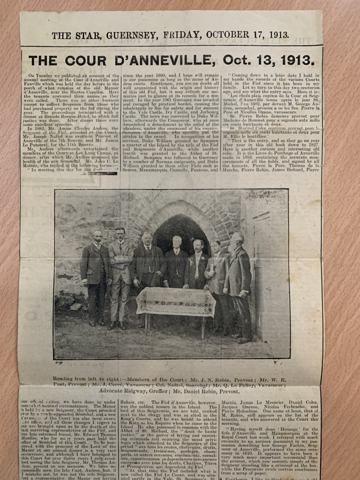 The Star, 17 October 1913: "The Cour d'Anneville, Oct. 13, 1913"newspaper17 October 1913 · Open documentThe whole article. The annual meeting of the "Cour d'Anneville and Fauville" was held on Monday 13 October 1913 "in the porch of what remains of the old Manoir d'Anneville, near the Hautes Capelles". The tenants answered their names; fivepence was collected from those who had bought property on the fief during the year; the Court then dined at the Grande Rocque Hotel. The paper reprints the speeches of 1882.
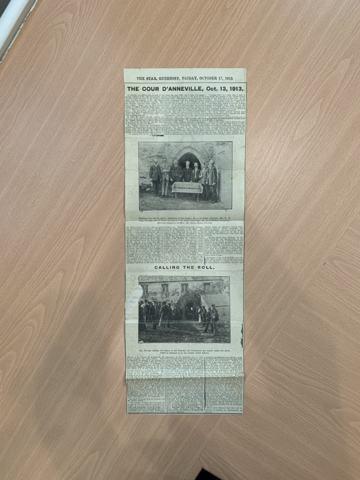 "Calling the roll": the Court under the arch, 1913photograph13 October 1913 · Open documentThe photograph printed by The Star. The Court sits inside the arch of the old manor while the roll of the tenants is called. The caption names the members: Mr J. N. Robin, Mr W. E. Poat and Mr Daniel Robin, Prévôts; Mr J. Carré and Mr Q. Le Pelley, Vavasseurs; Col. Naftel, Sénéchal; Advocate Ridgway, Greffier.
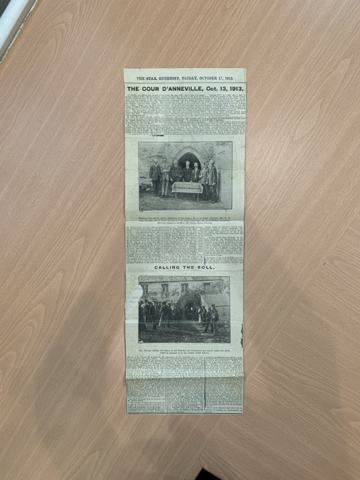 The Star, 1913: the photograph and its captionnewspaper (detail)17 October 1913 · Open documentA closer view of the same page: the photograph of the Court and the printed caption with the names of its members.
 The Star, 1913: the Seneschal's words of 1882newspaper (detail)17 October 1913 (speech of 1882) · Open documentThe reply of the new Seneschal, Mr John C. Le Mottée, in 1882: the Manor has a new Seigneur, the Court a new Seneschal and a new Vavasseur, after the death of Mr Edward Thomas Moullin, Seneschal for many years. He says that to have the Lord of the Manor at the annual dinner "is a very rare occurrence": in over thirty years in this Court he remembers the late Seigneur present only once.
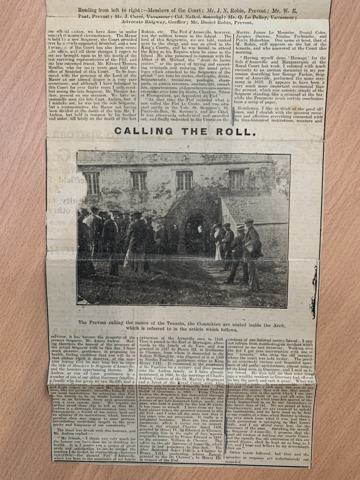 The Star, 1913: the same column, second photographnewspaper (detail)17 October 1913 (speech of 1882) · Open documentA second photograph of the same column, with the list of the members of the Court and the Seneschal's speech of 1882.
 The Star, 1913: the Seigneur reads from the register of 1682newspaper (detail)17 October 1913 (speech of 1882) · Open documentThe Seigneur's speech of 1882. He tells the founding tradition of 1061 as the family told it, then reads from "the records of the various Courts" the entry of two centuries before: "Les chefs plais capitos de la Cour et Seigneurie d'Anneville tenus après le jour St. Michel, l'an 1682, par devant M. George Andros, seneschal". The entries, he says, go on year after year to 1827. He also shows the Livre de Perchage of 1683, signed by the tenants.
 The Star, 1913: the tradition of 1061 as told in 1882newspaper (detail)17 October 1913 (speech of 1882) · Open documentThe passage on the origins: Duke William sends his esquire Sampson d'Anneville against the pirates and grants him a quarter of the island. This is the family tradition as it was told at a dinner in 1882; the museum treats it as tradition in Room 03.
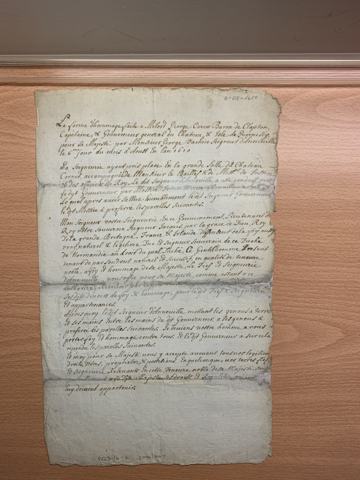
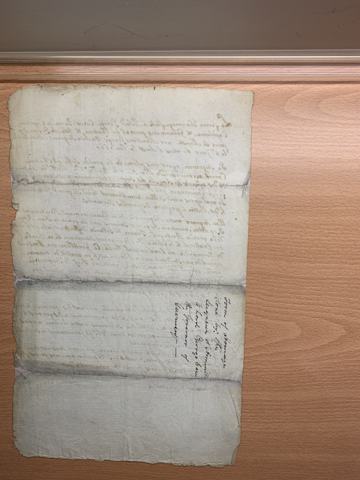
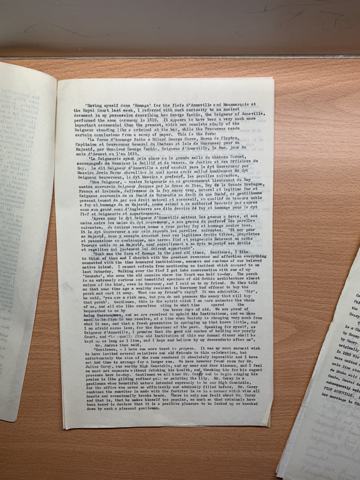 The Star, 1913: the homage of George Fachin in 1610newspaper (detail)17 October 1913 (homage of 6 August 1610) · Open documentThe Seigneur says he has just done homage at the Royal Court for the fiefs of Anneville and Mauxmarquis, and reads an old paper describing how George Fachin, Seigneur d'Anneville, did homage on 6 August 1610 before the Governor, Lord George Carew, in the great hall of Castle Cornet. In his own day, he says, the Seigneur simply stands at the bar while the Procureur reads from a slip of paper.
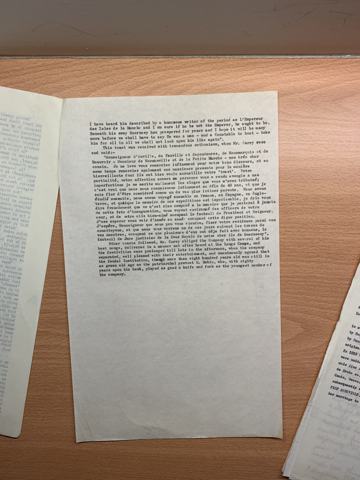 A toast to "Monsieur d'Anneville, de Fauville et de dépendances"newspaper (detail)newspaper cutting, after-dinner speeches · Open documentThe speeches after the dinner of the Court. Mr Carey answers a toast and addresses the Seigneur by all his titles: "Monsieur d'Anneville, de Fauville et de dépendances, de Mauxmarquis ...", "mon très cher cousin".
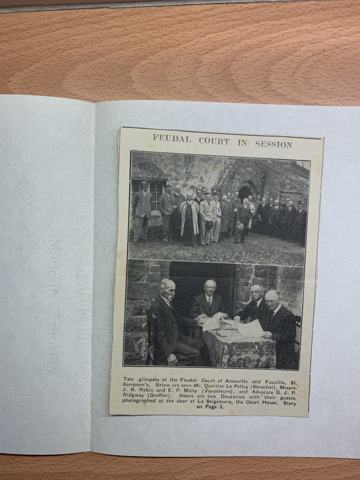 "Feudal Court in session"newspaperpress cutting, between 1921 and 1939 · Open documentA press cutting with two pictures of "the Feudal Court of Anneville and Fauville, St. Sampson's": Mr Quertier Le Pelley, Sénéchal; Messrs J. N. Robin and E. P. Mahy, Vavasseurs; Advocate G. J. P. Ridgway, Greffier. The names date it between 1921 and 1939.
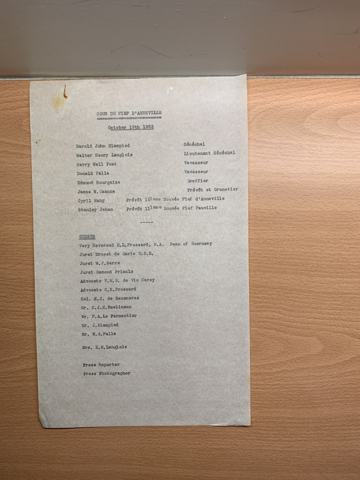 "Cour du Fief d'Anneville, October 19th 1953": who satpaper of the Court19 October 1953 · Open documentThe typed list of the sitting of 19 October 1953: Harold John Blampied, Sénéchal; Walter Henry Langlois, Lieutenant Sénéchal; Harry Wall Poat and Donald Falla, Vavasseurs; Edmund Bourgaize, Greffier; James W. Ozanne, Prévôt et Grenetier; Cyril Mahy, Prévôt for a bouvée of the Fief d'Anneville; Stanley Jehan, Prévôt for a bouvée of the Fief de Fauville. The guests follow.
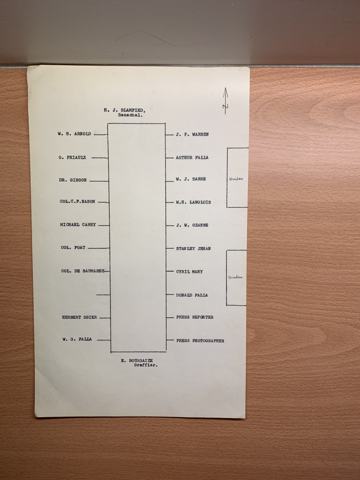 The table of the Court dinnerpaper of the Court1953 · Open documentA list of names from the Seneschal, H. J. Blampied, to the Greffier, E. Bourgaize, with the guests, a press reporter and a press photographer between them: the places at the dinner that followed the sitting.
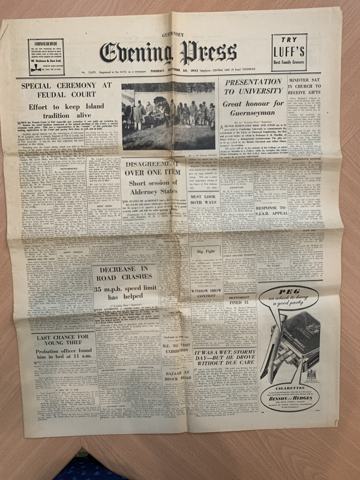 Guernsey Evening Press, 20 October 1953: the whole pagenewspaper20 October 1953 · Open documentThe page of the Guernsey Evening Press of Tuesday 20 October 1953, with the article "Special ceremony at Feudal Court — Effort to keep Island tradition alive".
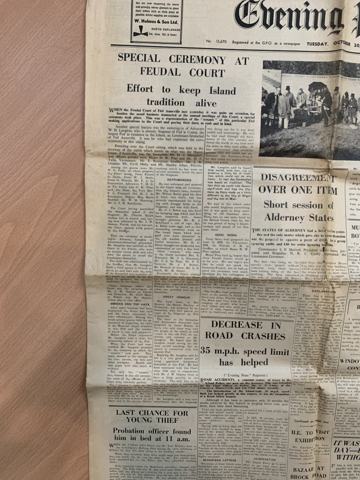 "Special ceremony at Feudal Court": the sitting, step by stepnewspaper20 October 1953 · Open documentThe article, close enough to read. The sitting was held "in the doorway of the stable which stands on what was the Manor house". The Seneschal asks whether the Seigneur is to attend; the Court opens with prayer by the Greffier; Advocate W. H. Langlois is sworn in as Lieutenant-Sénéchal, escorted by the Prévôt with a drawn sword-stick. Then "tenants" in smocks and top hats come to the bar of the Court and pay their dues in kind: fowls, eggs, potatoes, a coil of rope. Scraggy birds are fined. The beans are measured in the old wooden measures.
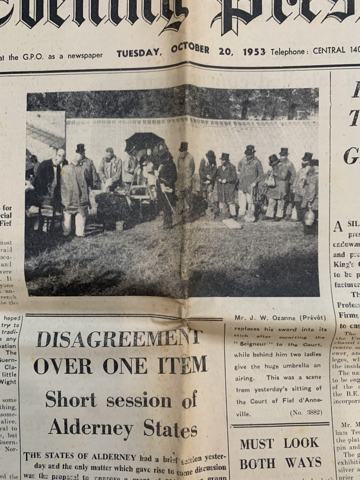 The Prévôt sheathes his sword, 1953photograph19 October 1953 · Open documentThe photograph of the Evening Press: "Mr. J. W. Ozanne (Prévôt) replaces his sword into its stick after escorting the 'Seigneur' to the Court."
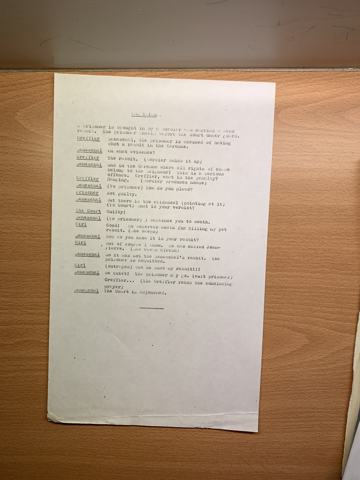 A mock trial: the rabbit of the Garennescriptundated, with the papers of the 1950s · Open documentThe typed script of a little play given before the Court. A prisoner is brought in with a dead rabbit, accused of shooting it in the Garenne, where all rights of chase belong to the Seigneur. He is condemned, then released when a girl claims the rabbit as her pet. The Greffier reads the closing prayer and the Court is adjourned. It is theatre, but it follows the real order of a sitting.
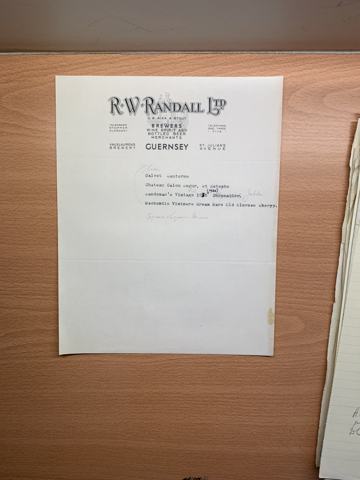 The wines of the Court dinnerpaper of the Courtundated · Open documentA paper on the letterhead of R. W. Randall Ltd, brewers and wine merchants of St Julian's Avenue, with a list of wines: sauternes, claret, sherry, cognac. The Court ended at table, and somebody kept the order.
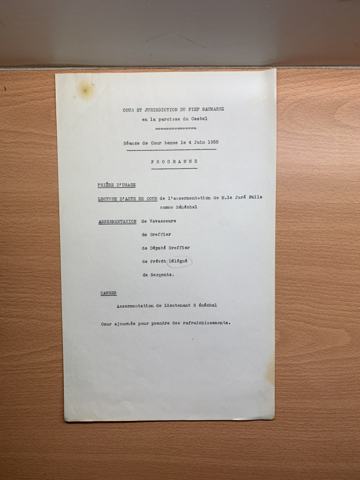 For comparison: the Court of the Fief Saumarez, 1955paper of another court4 June 1955 · Open documentThe order of a sitting of the "Cour et Jurisdiction du Fief Saumarez", in the parish of the Castel, on 4 June 1955: customary prayer, swearing of Sénéchal, Vavasseurs, Greffier, Prévôt and Sergents. Kept in the Anneville file as a model: the same offices and the same order as at Anneville.
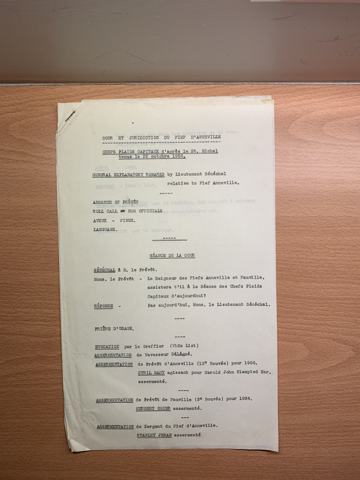 "Cour et Juridiction du Fief d'Anneville": the Chefs Plaids of 22 October 1956order of proceedings22 October 1956 · Open documentThe order of the sitting, typed for the officers. It begins with the question of the Sénéchal to the Prévôt: "Le Seigneur des Fiefs Anneville et Fauville, assistera-t-il à la Séance des Chefs Plaids Capitaux d'aujourd'hui?" Answer: "Pas aujourd'hui, Mons. le Lieutenant Sénéchal." Then the customary prayer, the roll called by the Greffier, and the oaths of a Vavasseur, of the Prévôt d'Anneville, of the Prévôt de Fauville and of the Sergent du Fief d'Anneville.
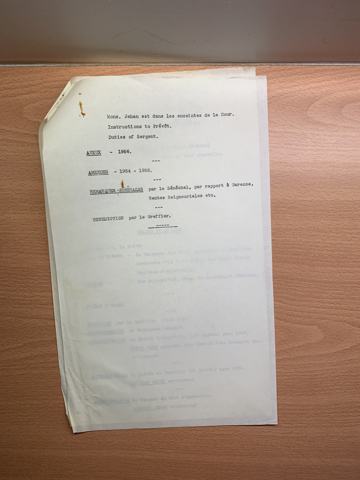 Chefs Plaids of 1956: aveux, fines, blessingorder of proceedings22 October 1956 · Open documentThe second sheet of the same order: instructions to the Prévôt, the duties of the Sergent, the "aveux" (the declarations by which tenants acknowledge what they hold) for 1956, the fines for 1954–1956, general remarks by the Sénéchal on the Garenne and the seigneurial rentes, and the blessing by the Greffier.
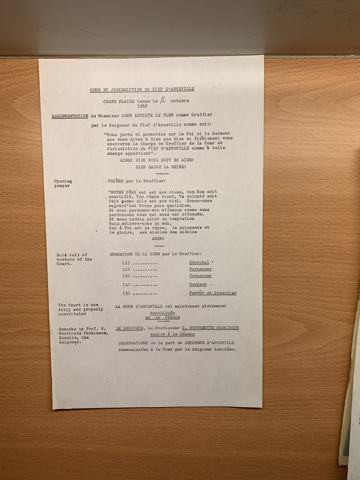 "Cour et Jurisdiction du Fief d'Anneville": the Chefs Plaids of October 1982order of proceedingsOctober 1982 · Open documentThe order of a sitting under Professor C. Northcote Parkinson as Seigneur. A new Greffier, John Auguste Le Flem, takes the oath, which ends "Ainsi Dieu vous soit en aide! Dieu sauve la Reine!" The Greffier says the Lord's Prayer and calls the Court: Sénéchal, two Vavasseurs, Sergent, Prévôt et Grenetier. Then: "la Cour d'Anneville" is fully constituted and sitting.
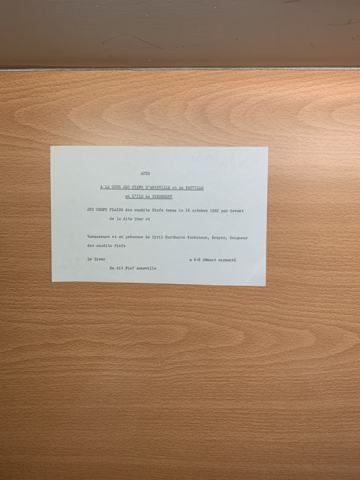 "Acte à la Cour des Fiefs d'Anneville et de Fauville", 1982act of the CourtOctober 1982 · Open documentAn act of the Court drawn at the Chefs Plaids of October 1982, in the presence of "Cyril Northcote Parkinson, écuyer, Seigneur des susdits Fiefs": an officer of the Fief d'Anneville "a été dûment sermenté". Three hundred years after the entry of 1682, the Court still writes its acts in French.
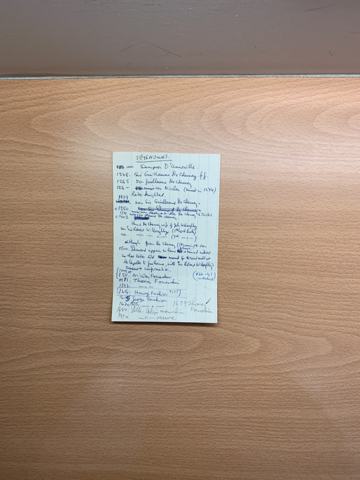 The Seigneurs, first sheetlistlist compiled after 1967 · Open documentA handwritten list of the Seigneurs of Anneville, from Sampson d'Anneville and the grant of 1248 to the Fachin family in the seventeenth century.
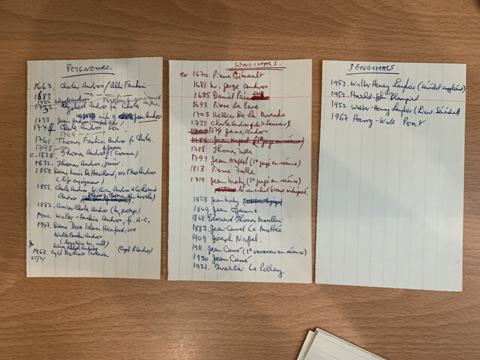 The Seigneurs since 1663 and the Sénéchaux since 1670listlist compiled after 1967 · Open documentThe list continues with the Andros Seigneurs from the marriage of 1663, then gives the Sénéchaux of the Court from 1670 to 1967. Beside some years the writer notes who presided when the Sénéchal was missing: "1er juge en séance", "1er vavasseur en séance".
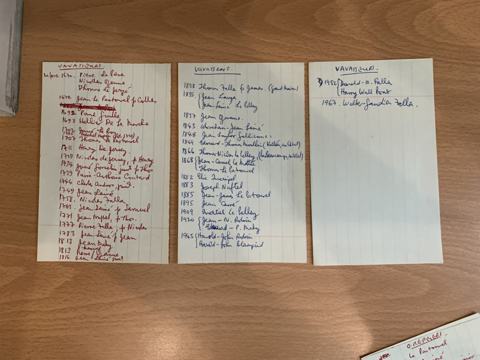 The Vavasseurs, 1670–1967listlist compiled after 1967 · Open documentThe Vavasseurs of the Court over three centuries. Read beside the other lists it shows a career inside the Court: the same men appear first as Greffier or Vavasseur and later as Sénéchal.
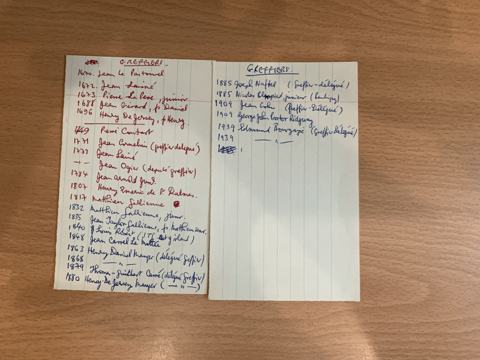 The Greffiers, 1670–1939listlist compiled after 1939 · Open documentThe Greffiers of the Court, with their deputies ("greffier délégué"). The last names, Advocate G. J. P. Ridgway (1909) and Edmund Bourgaize (1939), are the Greffiers of the newspapers of 1913 and 1953.
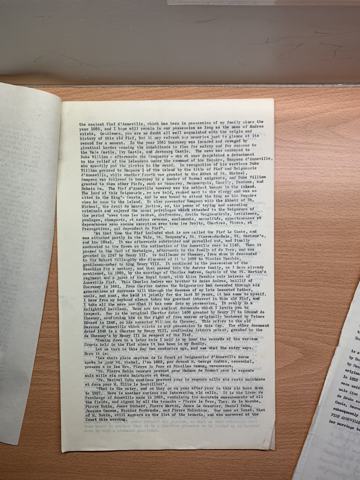
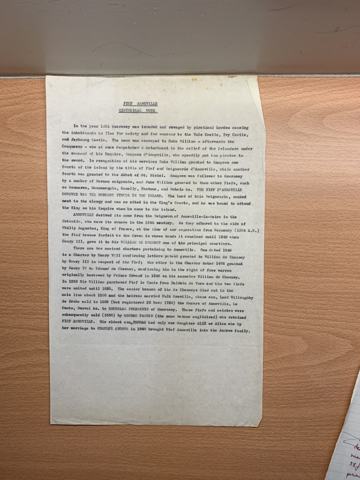
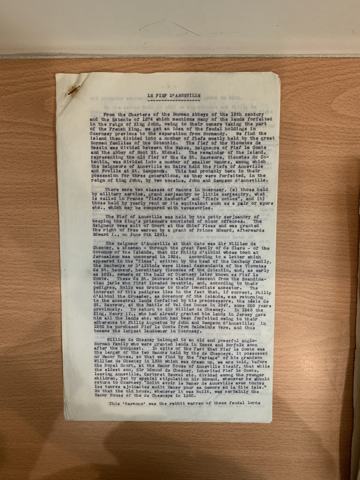 "Le Fief d'Anneville", page 1studytypescript, about 1940 · Open documentA typed history of the fief, with pencil notes. Page 1: the fiefs of Anneville and Fauville forfeited under King John; Anneville held by the service of keeping the King's prisoners; the Seigneur owes suit of court at the Chief Pleas; free warren granted on 9 June 1261; the partage of 1350 drawn up before the Royal Court at the Manor House of Anneville. It is a study, not a deed: the typescript writes "Henry II" for the king of 1248, who was Henry III.
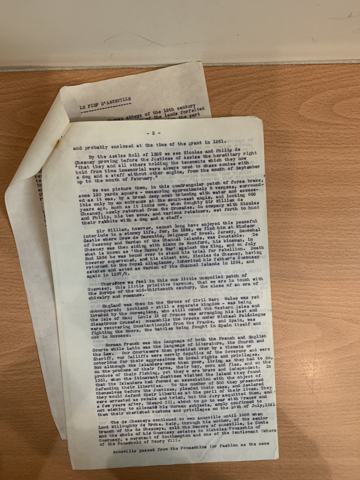 "Le Fief d'Anneville", page 2studytypescript, about 1940 · Open documentPage 2: the Garenne, a moated square of furze of about eight vergées; the Assize Roll of 1309, where the right to chase rabbits "with a dog and a staff" from September to February is proved; the sale of 1509 to Nicholas Fouaschin.
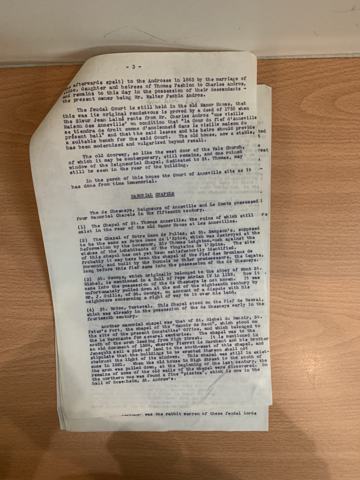 "Le Fief d'Anneville", page 3: where the Court sitsstudytypescript, about 1940 · Open documentPage 3, the passage on the Court: "The feudal Court is still held in the old Manor House". The writer quotes a lease of 1755 by which the tenant accepts that "la Cour du fief d'Anneville se tiendra de droit comme d'ancienneté dans la vieille maison du présent bail" and must provide a suitable bench. "In the porch of this house the Court of Anneville sits as it has done from time immemorial." The page goes on to the manorial chapels.
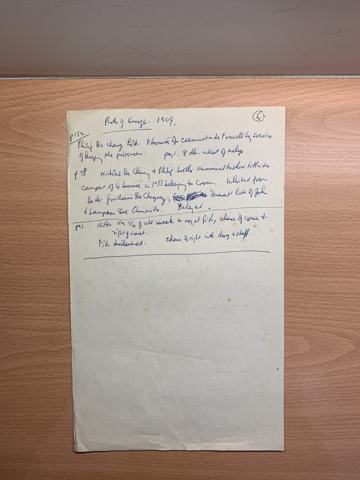 Notes from the medieval rollsnotesresearch notes · Open documentHandwritten notes taken from the printed rolls: the de Cheney brothers summoned to show their title; lands held "by service to keep the prisoners"; the chase "with dog and staff".
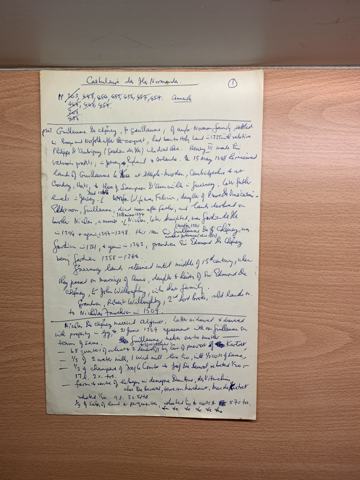 Notes from the Cartulaire des Îles Normandesnotesresearch notes · Open documentHandwritten notes with page numbers from the Cartulaire des Îles Normandes: the de Cheney family and the grant of 15 May 1248, down to the sale of 1509.
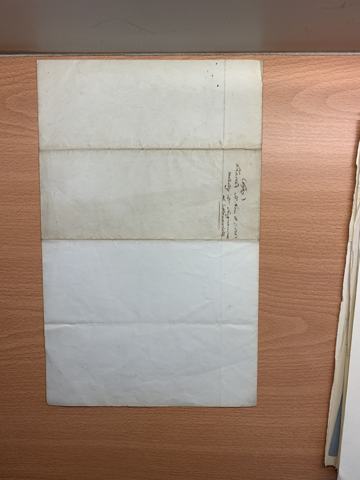 Slip: "Charter 38 Hen. 8 relating to Seigneurie of Anneville"labelarchive slip · Open documentThe slip that accompanies the next sheet: a charter of the thirty-eighth year of Henry VIII relating to the Seigneurie of Anneville.
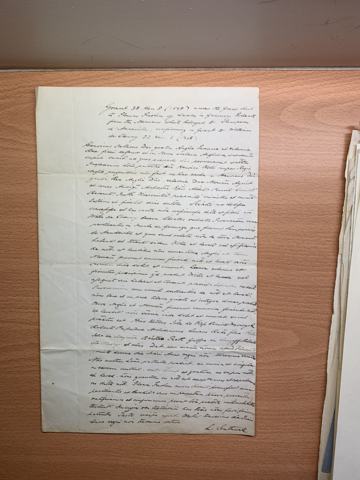 The grant under the Great Seal to the Fashion familycopy of a chartercopy of a charter of 38 Henry VIII · Open documentA copy, headed in English, of a grant of 38 Henry VIII under the Great Seal "of lands in Guernsey, escheats from the Normans, which belonged to Sampson d'Anneville", confirming the grant of 32 Henry III (1248). The Latin text follows: "Henricus Octavus Dei gratia ...". It is the royal title on which the Seigneurs of the sixteenth century stood.
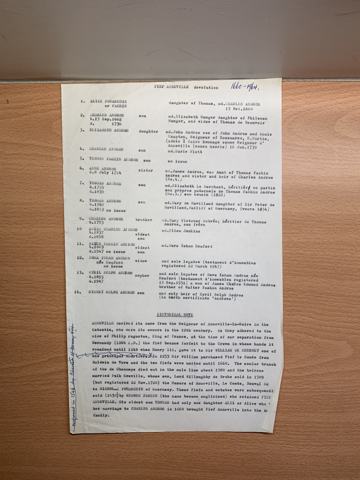 "Fief d'Anneville 1660–1964": the devolution, sheet 1tabletypescript, after 1964 · Open documentA typed table of how the fief passed from hand to hand from the marriage of Alice Fouaschin (Fachin) and Charles Andros on 15 October 1660. Among the steps: John Andros, Seigneur of Sausmarez, "admis à faire hommage comme Seigneur d'Anneville (causa uxoris)" on 16 January 1739.
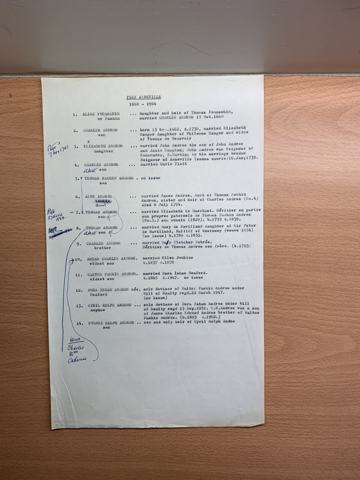 "Fief d'Anneville 1660–1964": the devolution, sheet 2tabletypescript, after 1964 · Open documentA second photograph of the table of devolution, 1660–1964.
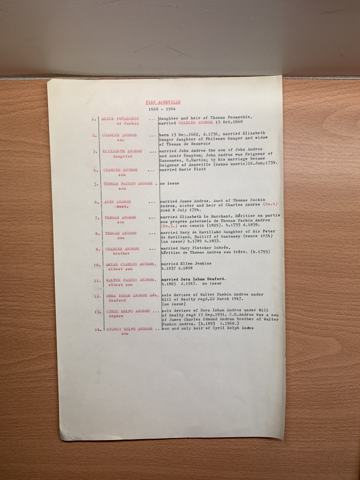 "Fief d'Anneville 1660–1964": the devolution, sheet 3tabletypescript, after 1964 · Open documentA third photograph of the table of devolution, 1660–1964.
 Slip: "1 July 1899, Andros"label1 July 1899 · Open documentThe slip of the next two sheets: the act of July 1899 on the inheritance of the Andros family.
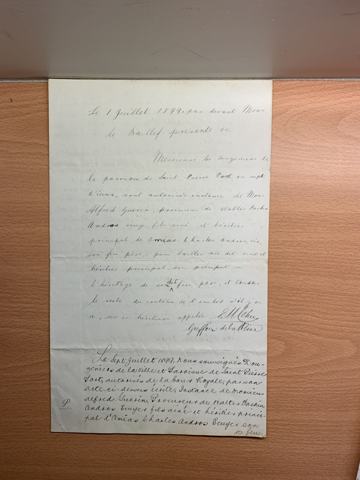 1899: the eldest son takes his shareact1 and 7 July 1899 · Open documentA handwritten copy of an act before the Bailiff, 1 July 1899, with the report of the Douzeniers of 7 July: Walter Fachin Andros, "fils aîné et héritier principal" of the late Amias Charles Andros, has his share as eldest son set out on his father's inheritance.
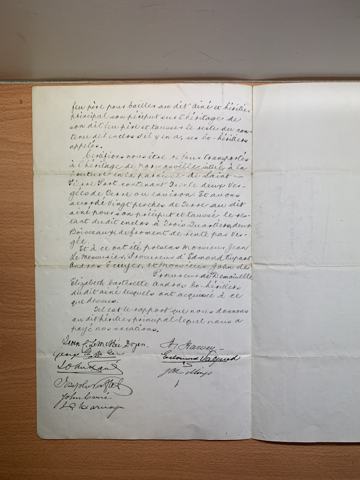 1899: the same act, second sheetactJuly 1899 · Open documentThe second sheet of the act of July 1899, with the land measured in vergées and perches and the wheat rent due on it.
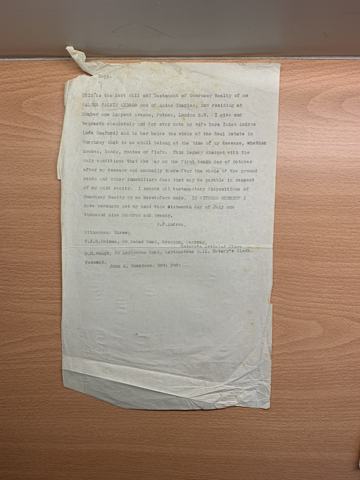 The will of Walter Fachin Androswill (copy)will; the year is read as 1920 or 1923 · Open documentA typed copy of the will of Walter Fachin Andros, son of Amias Charles, of Larpent Avenue, Putney. He leaves to his wife Dora Isham Andros, born Heaford, and her heirs all his real estate in Guernsey, "houses, lands, rentes or fiefs". This is how the fief left the direct Andros line.
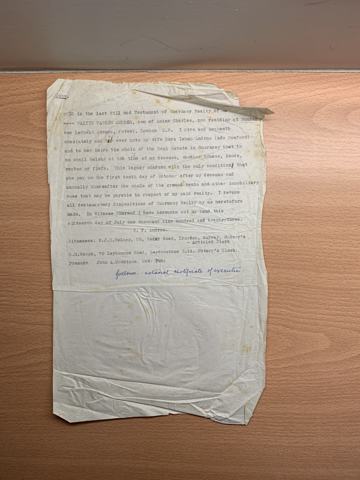 The will of Walter Fachin Andros, second photographwill (copy)will; the year is read as 1920 or 1923 · Open documentA second photograph of the same will, with the signatures of the witnesses.
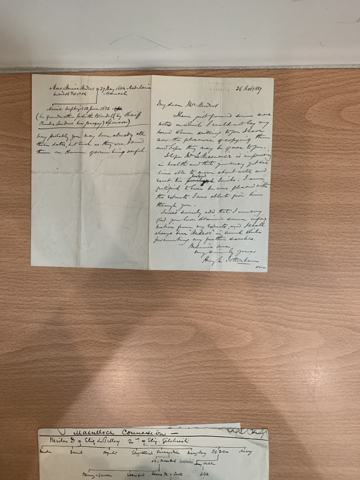 A letter with family datesletterletter, undated · Open documentA fragment of a handwritten letter sending dates of marriages and baptisms of the seventeenth century for the family tree.
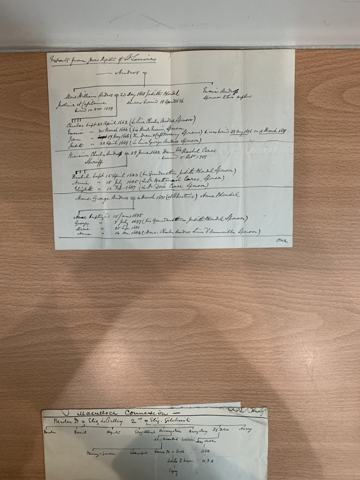 Marriages and baptisms, 1661–1707notesnotes, entries of 1661–1707 · Open documentHandwritten notes of marriages and baptisms between 1661 and 1707, with the names of the godparents, several of them Jurats of the Royal Court.
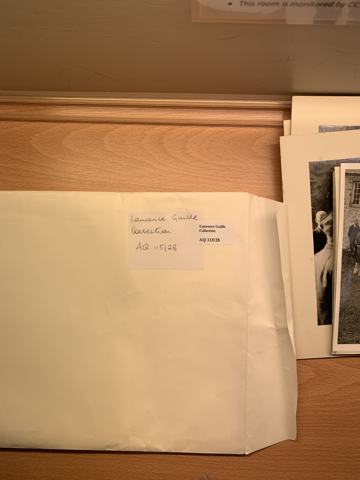 The Court of Anneville in session: photographs (1/20)photographc. 1940–50 · Open documentPhotographs of a meeting of the court of the Fief d'Anneville. The Island Archives date them to about 1940–50 and note the name "L. Guille" with them. They show the officers in top hats and the table with the open registers.
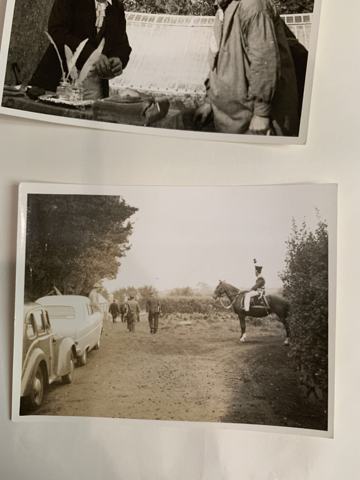 The Court of Anneville in session: photographs (2/20)photographc. 1940–50 · Open documentPhotographs of a meeting of the court of the Fief d'Anneville. The Island Archives date them to about 1940–50 and note the name "L. Guille" with them. They show the officers in top hats and the table with the open registers.
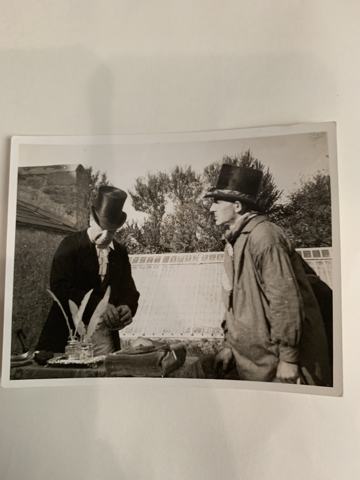 The Court of Anneville in session: photographs (3/20)photographc. 1940–50 · Open documentPhotographs of a meeting of the court of the Fief d'Anneville. The Island Archives date them to about 1940–50 and note the name "L. Guille" with them. They show the officers in top hats and the table with the open registers.
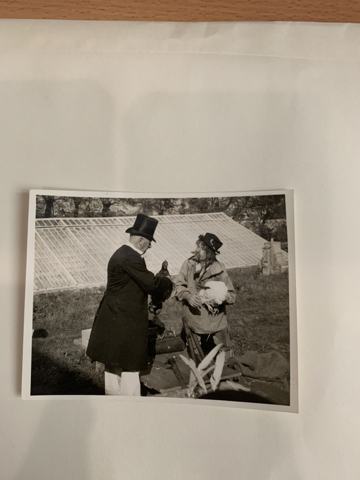 The Court of Anneville in session: photographs (4/20)photographc. 1940–50 · Open documentPhotographs of a meeting of the court of the Fief d'Anneville. The Island Archives date them to about 1940–50 and note the name "L. Guille" with them. They show the officers in top hats and the table with the open registers.
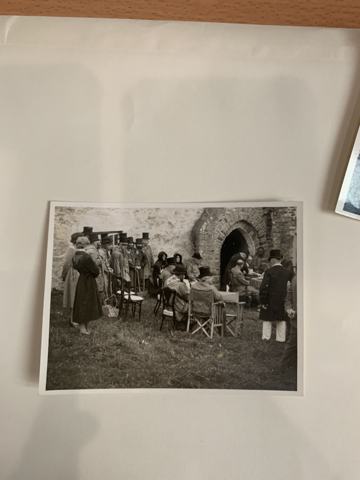 The Court of Anneville in session: photographs (5/20)photographc. 1940–50 · Open documentPhotographs of a meeting of the court of the Fief d'Anneville. The Island Archives date them to about 1940–50 and note the name "L. Guille" with them. They show the officers in top hats and the table with the open registers.
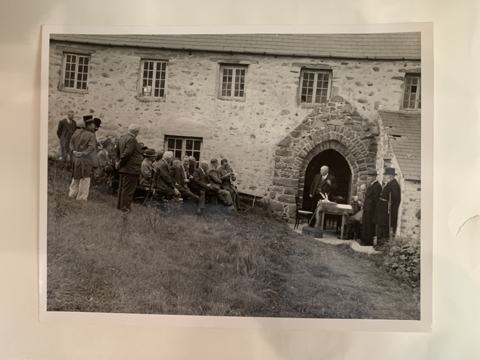 The Court of Anneville in session: photographs (6/20)photographc. 1940–50 · Open documentPhotographs of a meeting of the court of the Fief d'Anneville. The Island Archives date them to about 1940–50 and note the name "L. Guille" with them. They show the officers in top hats and the table with the open registers.
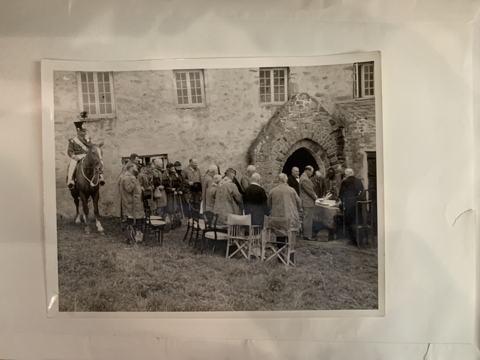 The Court of Anneville in session: photographs (7/20)photographc. 1940–50 · Open documentPhotographs of a meeting of the court of the Fief d'Anneville. The Island Archives date them to about 1940–50 and note the name "L. Guille" with them. They show the officers in top hats and the table with the open registers.
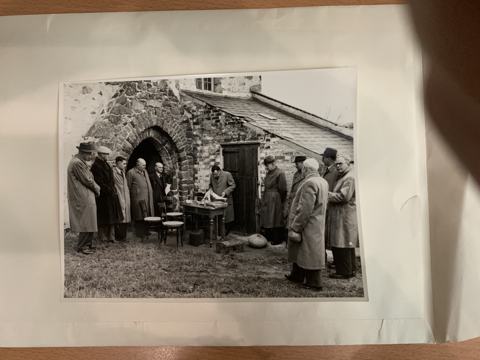 The Court of Anneville in session: photographs (8/20)photographc. 1940–50 · Open documentPhotographs of a meeting of the court of the Fief d'Anneville. The Island Archives date them to about 1940–50 and note the name "L. Guille" with them. They show the officers in top hats and the table with the open registers.
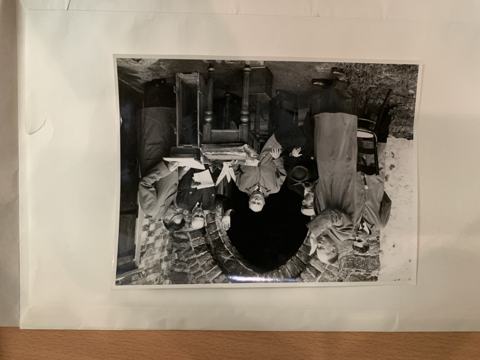 The Court of Anneville in session: photographs (9/20)photographc. 1940–50 · Open documentPhotographs of a meeting of the court of the Fief d'Anneville. The Island Archives date them to about 1940–50 and note the name "L. Guille" with them. They show the officers in top hats and the table with the open registers.
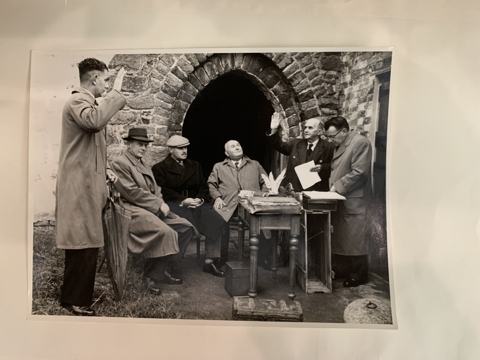 The Court of Anneville in session: photographs (10/20)photographc. 1940–50 · Open documentPhotographs of a meeting of the court of the Fief d'Anneville. The Island Archives date them to about 1940–50 and note the name "L. Guille" with them. They show the officers in top hats and the table with the open registers.
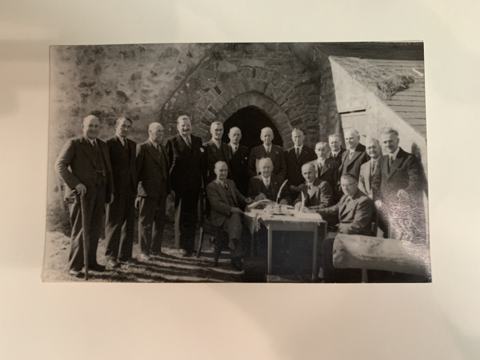 The Court of Anneville in session: photographs (11/20)photographc. 1940–50 · Open documentPhotographs of a meeting of the court of the Fief d'Anneville. The Island Archives date them to about 1940–50 and note the name "L. Guille" with them. They show the officers in top hats and the table with the open registers.
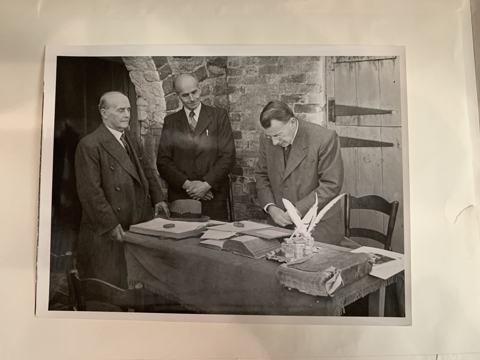 The Court of Anneville in session: photographs (12/20)photographc. 1940–50 · Open documentPhotographs of a meeting of the court of the Fief d'Anneville. The Island Archives date them to about 1940–50 and note the name "L. Guille" with them. They show the officers in top hats and the table with the open registers.
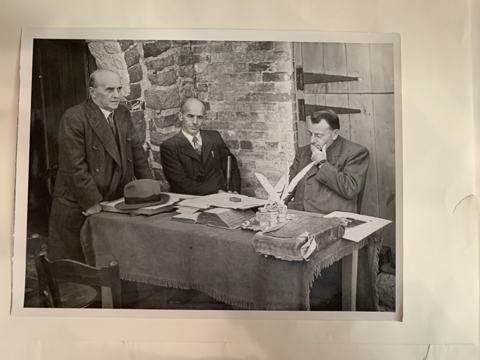 The Court of Anneville in session: photographs (13/20)photographc. 1940–50 · Open documentPhotographs of a meeting of the court of the Fief d'Anneville. The Island Archives date them to about 1940–50 and note the name "L. Guille" with them. They show the officers in top hats and the table with the open registers.
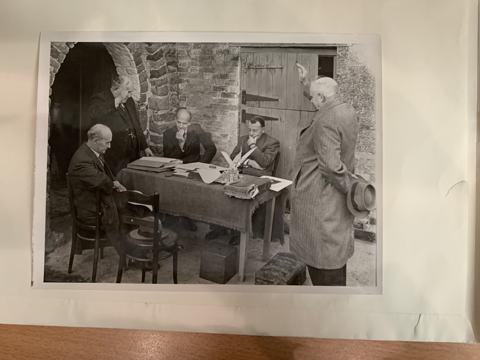 The Court of Anneville in session: photographs (14/20)photographc. 1940–50 · Open documentPhotographs of a meeting of the court of the Fief d'Anneville. The Island Archives date them to about 1940–50 and note the name "L. Guille" with them. They show the officers in top hats and the table with the open registers.
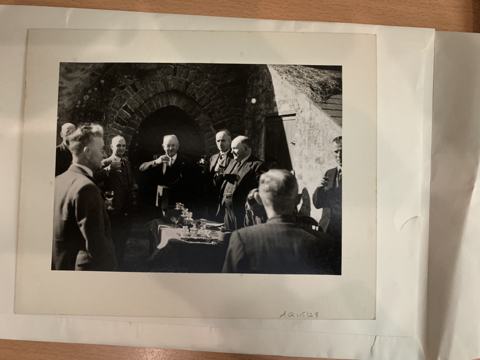 The Court of Anneville in session: photographs (15/20)photographc. 1940–50 · Open documentPhotographs of a meeting of the court of the Fief d'Anneville. The Island Archives date them to about 1940–50 and note the name "L. Guille" with them. They show the officers in top hats and the table with the open registers.
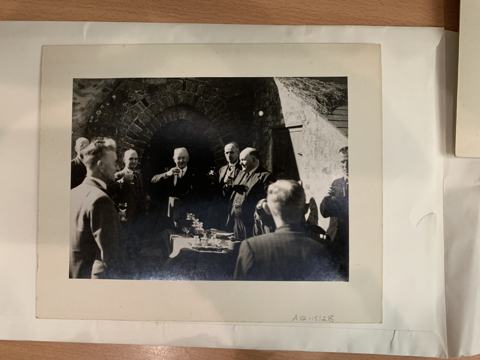 The Court of Anneville in session: photographs (16/20)photographc. 1940–50 · Open documentPhotographs of a meeting of the court of the Fief d'Anneville. The Island Archives date them to about 1940–50 and note the name "L. Guille" with them. They show the officers in top hats and the table with the open registers.
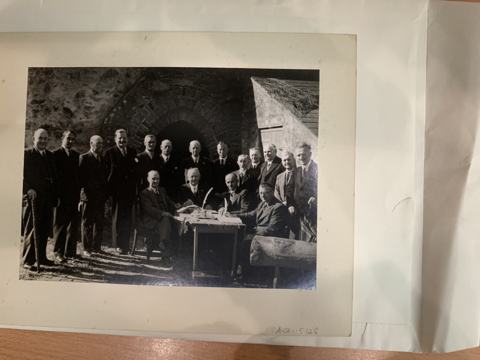 The Court of Anneville in session: photographs (17/20)photographc. 1940–50 · Open documentPhotographs of a meeting of the court of the Fief d'Anneville. The Island Archives date them to about 1940–50 and note the name "L. Guille" with them. They show the officers in top hats and the table with the open registers.
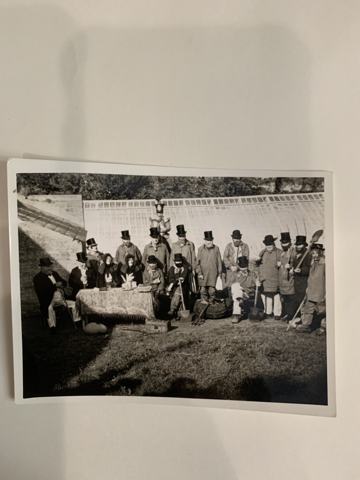 The Court of Anneville in session: photographs (18/20)photographc. 1940–50 · Open documentPhotographs of a meeting of the court of the Fief d'Anneville. The Island Archives date them to about 1940–50 and note the name "L. Guille" with them. They show the officers in top hats and the table with the open registers.
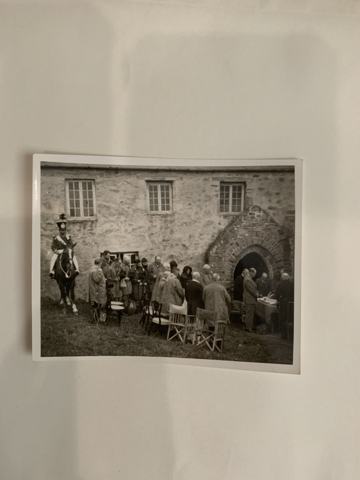 The Court of Anneville in session: photographs (19/20)photographc. 1940–50 · Open documentPhotographs of a meeting of the court of the Fief d'Anneville. The Island Archives date them to about 1940–50 and note the name "L. Guille" with them. They show the officers in top hats and the table with the open registers.
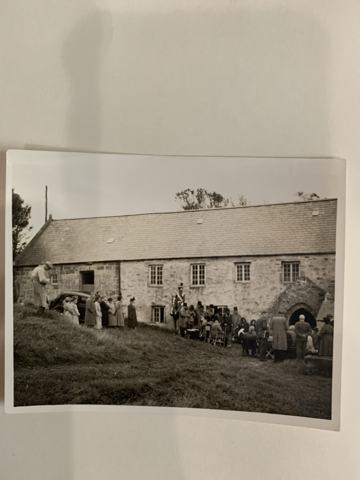 The Court of Anneville in session: photographs (20/20)photographc. 1940–50 · Open documentPhotographs of a meeting of the court of the Fief d'Anneville. The Island Archives date them to about 1940–50 and note the name "L. Guille" with them. They show the officers in top hats and the table with the open registers.
 Form of homage of the Seigneur d'Anneville, 1610 (1/3)form of homage6 August 1610 · Open documentThe form of homage made on 6 August 1610 to Lord George Carew, Governor of Guernsey, by George Fachin, Seigneur d'Anneville, as the Island Archives describe it. Homage is the act by which the Seigneur acknowledges that he holds the fief of the Crown.
 Form of homage of the Seigneur d'Anneville, 1610 (2/3)form of homage6 August 1610 · Open documentThe form of homage made on 6 August 1610 to Lord George Carew, Governor of Guernsey, by George Fachin, Seigneur d'Anneville, as the Island Archives describe it. Homage is the act by which the Seigneur acknowledges that he holds the fief of the Crown.
 Form of homage of the Seigneur d'Anneville, 1610 (3/3)form of homage6 August 1610 · Open documentThe form of homage made on 6 August 1610 to Lord George Carew, Governor of Guernsey, by George Fachin, Seigneur d'Anneville, as the Island Archives describe it. Homage is the act by which the Seigneur acknowledges that he holds the fief of the Crown.
 Booklet of acts of the Court of Anneville, 1641–1786 (1/8)acts of the Court1641–1786 · Open documentA booklet of acts of the Court of Anneville from 1641 to 1786, about the ownership of land at les Grands Capelles (Island Archives description). It shows the court at work across a century and a half.
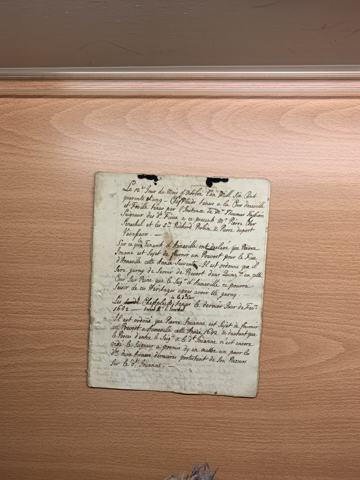 Booklet of acts of the Court of Anneville, 1641–1786 (2/8)acts of the Court1641–1786 · Open documentA booklet of acts of the Court of Anneville from 1641 to 1786, about the ownership of land at les Grands Capelles (Island Archives description). It shows the court at work across a century and a half.
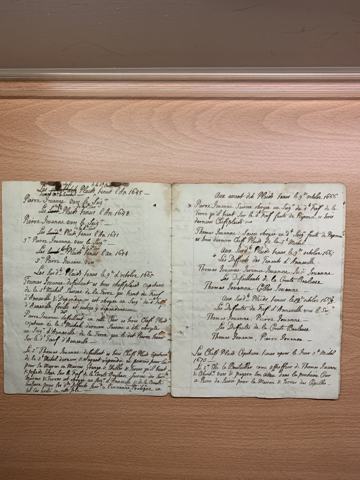 Booklet of acts of the Court of Anneville, 1641–1786 (3/8)acts of the Court1641–1786 · Open documentA booklet of acts of the Court of Anneville from 1641 to 1786, about the ownership of land at les Grands Capelles (Island Archives description). It shows the court at work across a century and a half.
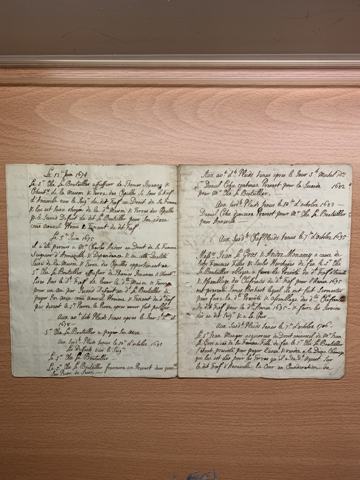 Booklet of acts of the Court of Anneville, 1641–1786 (4/8)acts of the Court1641–1786 · Open documentA booklet of acts of the Court of Anneville from 1641 to 1786, about the ownership of land at les Grands Capelles (Island Archives description). It shows the court at work across a century and a half.
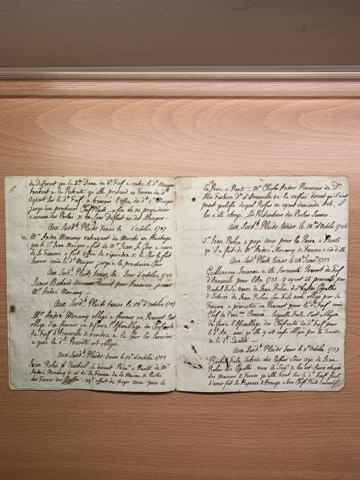 Booklet of acts of the Court of Anneville, 1641–1786 (5/8)acts of the Court1641–1786 · Open documentA booklet of acts of the Court of Anneville from 1641 to 1786, about the ownership of land at les Grands Capelles (Island Archives description). It shows the court at work across a century and a half.
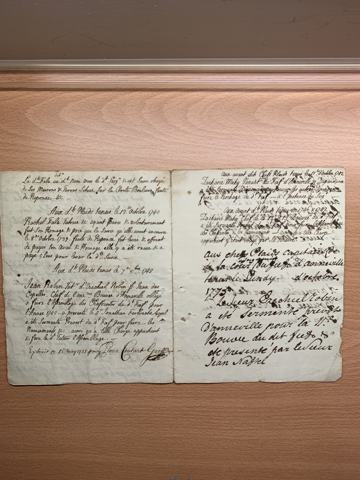 Booklet of acts of the Court of Anneville, 1641–1786 (6/8)acts of the Court1641–1786 · Open documentA booklet of acts of the Court of Anneville from 1641 to 1786, about the ownership of land at les Grands Capelles (Island Archives description). It shows the court at work across a century and a half.
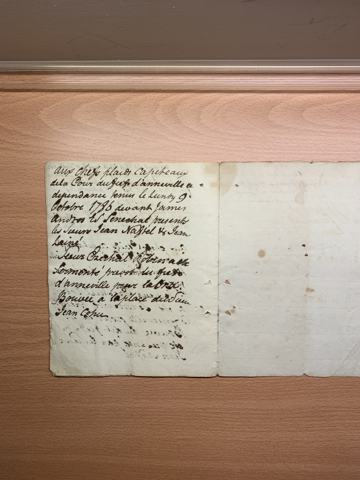 Booklet of acts of the Court of Anneville, 1641–1786 (7/8)acts of the Court1641–1786 · Open documentA booklet of acts of the Court of Anneville from 1641 to 1786, about the ownership of land at les Grands Capelles (Island Archives description). It shows the court at work across a century and a half.
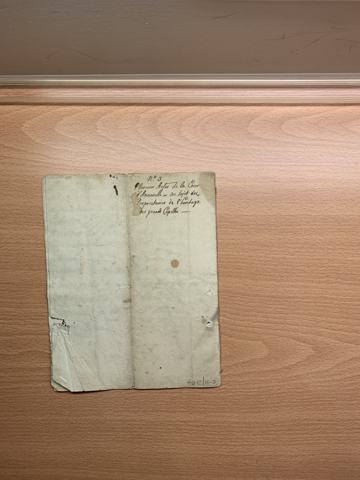 Booklet of acts of the Court of Anneville, 1641–1786 (8/8)acts of the Court1641–1786 · Open documentA booklet of acts of the Court of Anneville from 1641 to 1786, about the ownership of land at les Grands Capelles (Island Archives description). It shows the court at work across a century and a half.
 Chefs Plaids of the Fief d'Anneville, with mention of La Rozière (1/7)Chefs Plaids18th century · Open documentSheets of the Chefs Plaids, the yearly chief sittings of the Court of Anneville, kept by the Island Archives with a note that they mention La Rozière. The exact dates of each sheet are still being read from the handwriting.
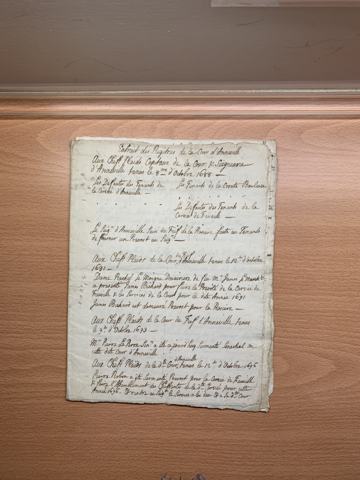 Chefs Plaids of the Fief d'Anneville, with mention of La Rozière (2/7)Chefs Plaids18th century · Open documentSheets of the Chefs Plaids, the yearly chief sittings of the Court of Anneville, kept by the Island Archives with a note that they mention La Rozière. The exact dates of each sheet are still being read from the handwriting.
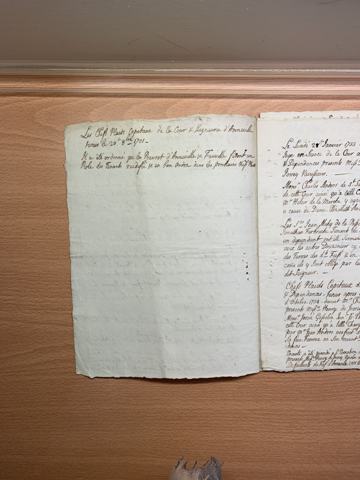 Chefs Plaids of the Fief d'Anneville, with mention of La Rozière (3/7)Chefs Plaids18th century · Open documentSheets of the Chefs Plaids, the yearly chief sittings of the Court of Anneville, kept by the Island Archives with a note that they mention La Rozière. The exact dates of each sheet are still being read from the handwriting.
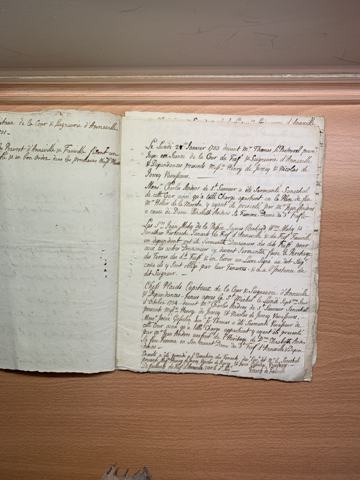 Chefs Plaids of the Fief d'Anneville, with mention of La Rozière (4/7)Chefs Plaids18th century · Open documentSheets of the Chefs Plaids, the yearly chief sittings of the Court of Anneville, kept by the Island Archives with a note that they mention La Rozière. The exact dates of each sheet are still being read from the handwriting.
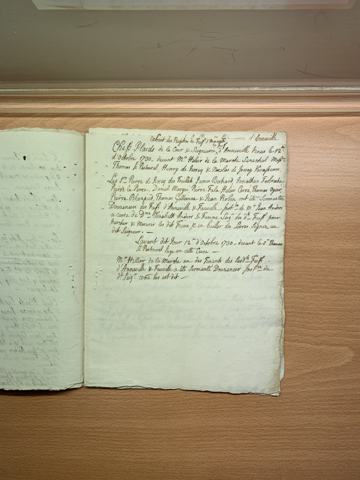 Chefs Plaids of the Fief d'Anneville, with mention of La Rozière (5/7)Chefs Plaids18th century · Open documentSheets of the Chefs Plaids, the yearly chief sittings of the Court of Anneville, kept by the Island Archives with a note that they mention La Rozière. The exact dates of each sheet are still being read from the handwriting.
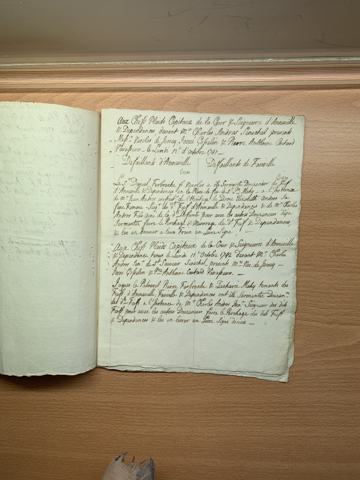 Chefs Plaids of the Fief d'Anneville, with mention of La Rozière (6/7)Chefs Plaids18th century · Open documentSheets of the Chefs Plaids, the yearly chief sittings of the Court of Anneville, kept by the Island Archives with a note that they mention La Rozière. The exact dates of each sheet are still being read from the handwriting.
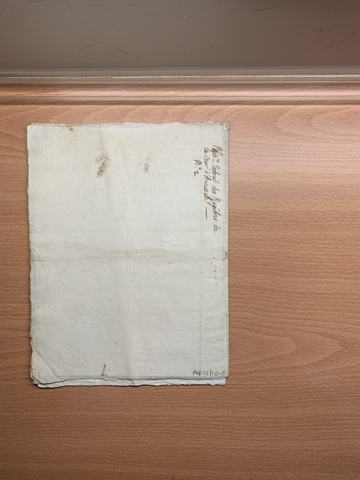 Chefs Plaids of the Fief d'Anneville, with mention of La Rozière (7/7)Chefs Plaids18th century · Open documentSheets of the Chefs Plaids, the yearly chief sittings of the Court of Anneville, kept by the Island Archives with a note that they mention La Rozière. The exact dates of each sheet are still being read from the handwriting.
 List of acts of the Royal Court and of the Court of Anneville, 1732–1759 (1/8)list of acts1732–1759 · Open documentA list of acts of the Royal Court and of the Court of the Fief d'Anneville for the years 1732–1759 (Island Archives description).
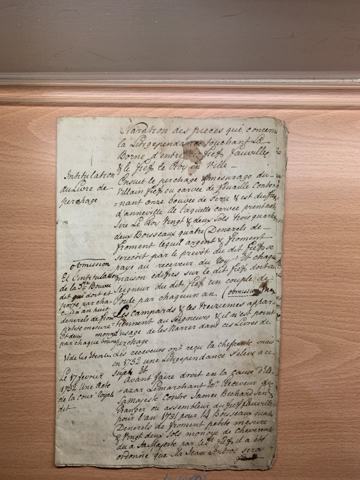 List of acts of the Royal Court and of the Court of Anneville, 1732–1759 (2/8)list of acts1732–1759 · Open documentA list of acts of the Royal Court and of the Court of the Fief d'Anneville for the years 1732–1759 (Island Archives description).
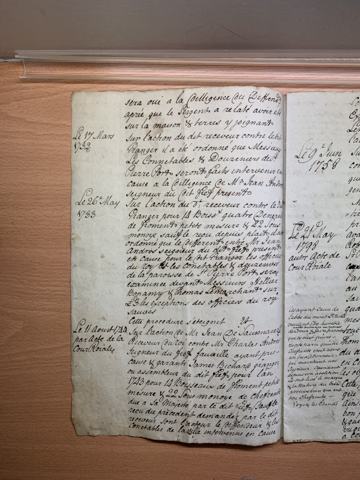 List of acts of the Royal Court and of the Court of Anneville, 1732–1759 (3/8)list of acts1732–1759 · Open documentA list of acts of the Royal Court and of the Court of the Fief d'Anneville for the years 1732–1759 (Island Archives description).
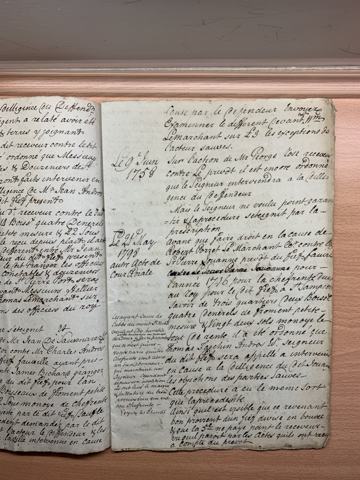 List of acts of the Royal Court and of the Court of Anneville, 1732–1759 (4/8)list of acts1732–1759 · Open documentA list of acts of the Royal Court and of the Court of the Fief d'Anneville for the years 1732–1759 (Island Archives description).
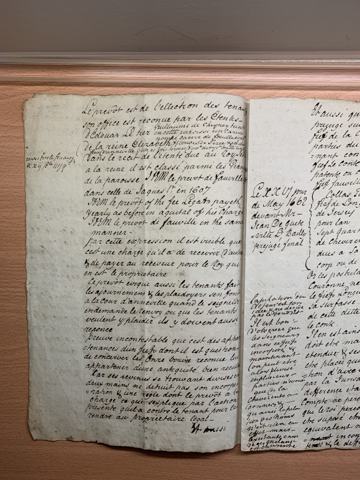 List of acts of the Royal Court and of the Court of Anneville, 1732–1759 (5/8)list of acts1732–1759 · Open documentA list of acts of the Royal Court and of the Court of the Fief d'Anneville for the years 1732–1759 (Island Archives description).
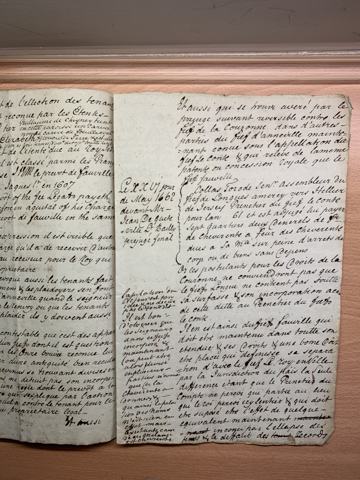 List of acts of the Royal Court and of the Court of Anneville, 1732–1759 (6/8)list of acts1732–1759 · Open documentA list of acts of the Royal Court and of the Court of the Fief d'Anneville for the years 1732–1759 (Island Archives description).
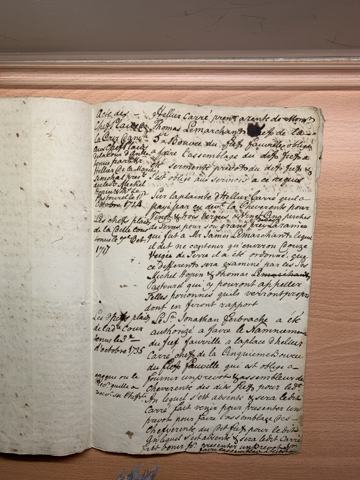 List of acts of the Royal Court and of the Court of Anneville, 1732–1759 (7/8)list of acts1732–1759 · Open documentA list of acts of the Royal Court and of the Court of the Fief d'Anneville for the years 1732–1759 (Island Archives description).
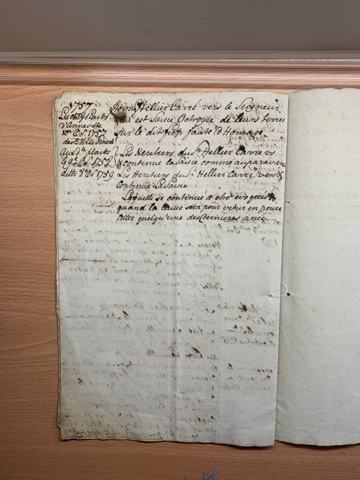 List of acts of the Royal Court and of the Court of Anneville, 1732–1759 (8/8)list of acts1732–1759 · Open documentA list of acts of the Royal Court and of the Court of the Fief d'Anneville for the years 1732–1759 (Island Archives description).
 Extracts from the Chefs Plaids of the Court and Seigneurie of Anneville, 1802 (1/3)extract of Chefs Plaids31 March 1802 · Open documentExtracts from the Chief Pleas of the Court and Seigneurie of the Fief d'Anneville, dated 31 March 1802 by the Island Archives.
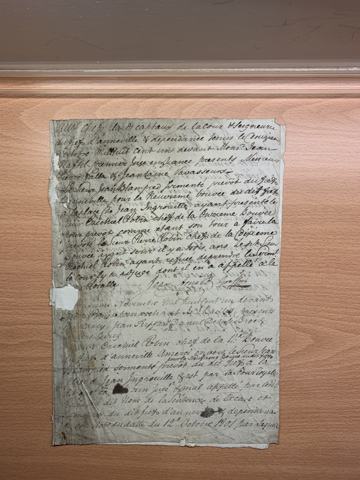 Extracts from the Chefs Plaids of the Court and Seigneurie of Anneville, 1802 (2/3)extract of Chefs Plaids31 March 1802 · Open documentExtracts from the Chief Pleas of the Court and Seigneurie of the Fief d'Anneville, dated 31 March 1802 by the Island Archives.
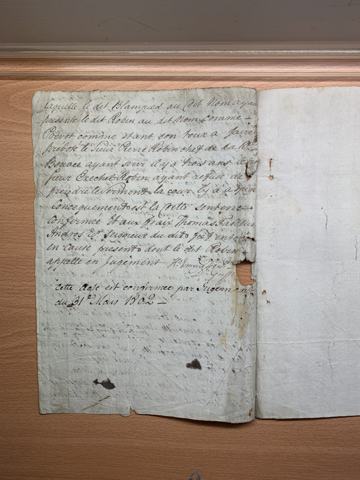 Extracts from the Chefs Plaids of the Court and Seigneurie of Anneville, 1802 (3/3)extract of Chefs Plaids31 March 1802 · Open documentExtracts from the Chief Pleas of the Court and Seigneurie of the Fief d'Anneville, dated 31 March 1802 by the Island Archives.